Morocco sits at the crossroads of Africa, Arabia, and Europe — and no other country rewards curious travelers quite like it does. For Americans in 2026, Morocco is one of the most accessible “far away” destinations on earth: no visa required, a 7–8 hour flight from the East Coast, and a culture that is genuinely unlike anything most Westerners have ever encountered. This complete Morocco tourism guide for 2026 gives you everything you need to plan a first — or second — trip: when to go, what to see, how to get around, how much to budget, and what to realistically expect.
Why Americans Are Choosing Morocco Right Now
Morocco received over 17 million international visitors in 2024, with American arrivals growing faster than any other nationality. The reasons are practical: direct Royal Air Maroc flights from JFK and Washington Dulles, no visa requirement, US State Department Level 1 safety rating, and a favorable exchange rate (1 USD ≈ 10 MAD). But the real pull is experiential. Morocco offers a combination that has become increasingly rare: genuine cultural immersion without the logistical difficulty of Southeast Asia or the expense of Japan.
Best Time to Visit Morocco: Season by Region
Morocco’s climate varies dramatically by region. The Sahara and the imperial cities (Marrakech, Fes, Meknes, Rabat) follow one pattern; the Atlantic coast, the Rif Mountains, and the High Atlas each have their own micro-climates.
| Season | Temperatures | Best For | Watch Out For |
|---|---|---|---|
| Spring (Mar–May) | 59–77°F in cities; warmer south | Imperial cities, Atlas trekking, desert, wildflowers | Spring break crowds; book early for April |
| Summer (Jun–Aug) | 95–113°F inland; 72–82°F coast | Atlantic coast, Essaouira, Chefchaouen | Brutal heat in Marrakech, Fes, Sahara |
| Fall (Sep–Nov) | 64–86°F across most regions | Entire country — the best overall season | Light rain possible in November |
| Winter (Dec–Feb) | 46–64°F in cities; snow in Atlas | Marrakech, Fes, lower prices, thin crowds | Cold evenings; some mountain roads closed |
Our recommendation: October is the single best month to visit Morocco. Temperatures are ideal everywhere, the summer crowds have thinned, and the light in the medinas and desert is extraordinary.
Flights to Morocco from the US: What to Expect in 2026
Royal Air Maroc now operates direct nonstop flights from JFK and Washington Dulles to Casablanca (CMN), with connections to Marrakech (RAK) and Fes (FEZ). American Airlines, Delta, and all major European carriers (Air France, Iberia, Lufthansa, British Airways) offer one-stop service via their European hubs.
| Departure City | Destination | Off-Peak Round Trip | Peak Round Trip |
|---|---|---|---|
| New York (JFK) | Casablanca (CMN) | $480–$750 | $850–$1,400 |
| New York (JFK) | Marrakech (RAK) | $520–$800 | $900–$1,500 |
| Los Angeles (LAX) | Casablanca (CMN) | $650–$950 | $1,000–$1,700 |
| Miami (MIA) | Casablanca (CMN) | $500–$780 | $850–$1,400 |
| Chicago (ORD) | Casablanca (CMN) | $560–$850 | $900–$1,500 |
| Washington DC (IAD) | Casablanca (CMN) | $480–$750 | $820–$1,350 |
Visa Requirements for American Citizens
No visa required. American passport holders can enter Morocco visa-free for stays of up to 90 days. You need a valid US passport with at least 6 months validity beyond your return date. No travel vaccinations are required (though Hepatitis A and Typhoid are recommended by the CDC for some travelers).
The Essential Morocco Destinations
Marrakech — The Red City
Most first-time visitors to Morocco start in Marrakech, and for good reason. The city delivers maximum impact immediately: the chaos of Jemaa el-Fna square, the labyrinthine souks organized by craft (leatherworkers, dyers, coppersmiths, carpet sellers), and a concentration of historic monuments unmatched anywhere in the country. The UNESCO-listed medina contains the Koutoubia Mosque, Saadian Tombs, Ben Youssef Medersa, Bahia Palace, and El Badi Palace. Plan 2–3 full days. Read our complete Marrakech travel guide for a day-by-day breakdown.
Fes — The Spiritual and Intellectual Capital
Fes el-Bali is the world’s largest car-free urban area and home to the University of Al Quaraouiyine — the oldest continuously operating university on earth, founded in 859 AD. The Chouara Tanneries (where leather has been processed in the same pools since the 11th century), the carved plasterwork of Al-Attarine Medersa, and the sheer sensory intensity of the 9,000-street medina make Fes the most historically significant city in Morocco. Plan a minimum of 2 full days — ideally 3. Unlike Marrakech, Fes rewards slowness.
Chefchaouen — The Blue City
Perched at 2,100 feet in the Rif Mountains, Chefchaouen is famous for its medina painted in vivid shades of blue and white. The town has a completely different energy from the imperial cities — calmer, cooler, more artistic. The photography opportunities are extraordinary, particularly in the early morning before the day-trippers arrive. Plan 1–2 nights and hike to the Spanish mosque for the panoramic view.
Essaouira — The Atlantic Gem
A UNESCO-listed fortified port city on the Atlantic coast, Essaouira offers something no other Moroccan city can: a cool Atlantic breeze that makes it bearable even in August. The Portuguese ramparts, art galleries, music scene (it’s the birthplace of Gnawa music), and fresh seafood make it an essential stop for anyone spending more than a week in Morocco. It’s also one of the world’s top windsurfing and kitesurfing destinations.
The Sahara Desert
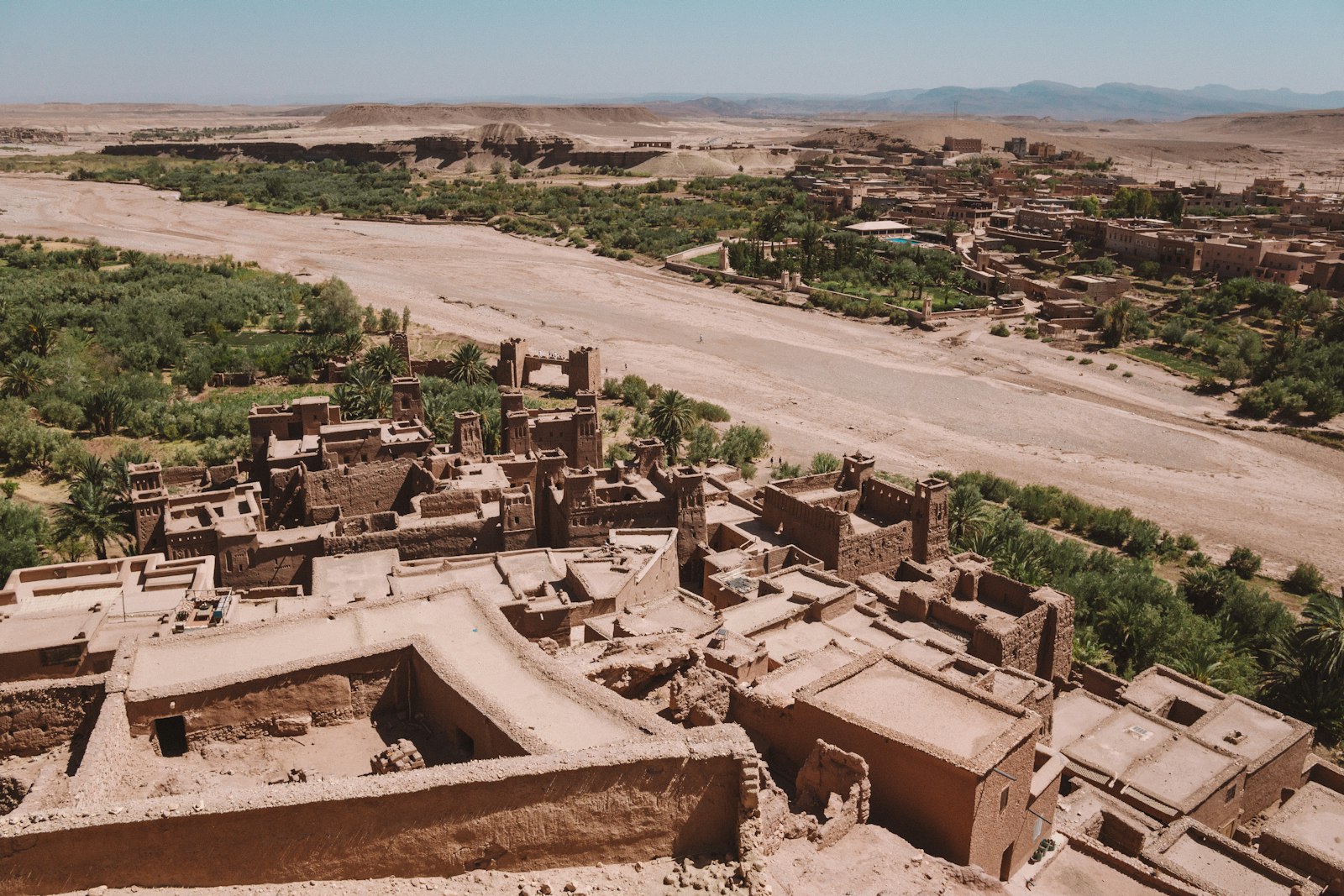
The Moroccan Sahara — specifically the Erg Chebbi dunes near Merzouga — represents the country’s most cinematic experience. Rising 500 feet above the surrounding flat desert, the dunes shift color from gold to red to deep orange depending on the light. Sleeping in a Berber bivouac under a sky unpolluted by artificial light, riding camels at sunset, and watching sunrise from the top of the main dune are experiences that most visitors describe as the highlight of their entire Morocco trip. See our Merzouga vs. Zagora comparison guide to choose the right Sahara experience.
Morocco Travel Budget 2026 (USD)
| Category | Budget Traveler | Mid-Range | Luxury |
|---|---|---|---|
| Accommodation/night | $15–30 (hostel/basic guesthouse) | $50–100 (mid-range riad) | $150–400+ (luxury riad/hotel) |
| Meals/day | $8–15 (street food + local restaurants) | $25–50 (sit-down restaurants) | $70–150+ (fine dining) |
| Local transport/day | $5–10 (bus + shared taxi) | $20–40 (private taxis + trains) | $60–100+ (private driver) |
| Activities/day | $5–15 | $20–50 | $100–300+ |
| Daily total/person | $35–70 | $115–240 | $380–950+ |
For a complete breakdown by city and activity, see our dedicated Morocco travel budget guide.
Getting Around Morocco
Train (ONCF)
Morocco’s rail network is the best in Africa. The Al Boraq high-speed train (Europe-built, runs at 200 mph) connects Tangier to Casablanca in 2h10, making Tangier a viable day trip from Rabat or Casablanca. Regular trains connect Casablanca, Rabat, Meknes, Fes, and Marrakech. Overnight train Fes–Marrakech costs around $18 in 2nd class, $35 in a sleeper couchette.
CTM & Supratours Buses
For destinations not served by train — Agadir, Ouarzazate, Merzouga, Essaouira, Chefchaouen, Dakhla — CTM and Supratours operate comfortable, air-conditioned long-distance buses. Fes to Chefchaouen: 3.5 hours, ~$9. Marrakech to Agadir: 4 hours, ~$12. Book at least a day ahead for popular routes in high season.
Car Rental
Renting a car is the most flexible option for exploring southern Morocco — the Road of Kasbahs, the Dadès Gorges, the Draa Valley, and the access road to Merzouga. Budget $45–65/day for a small car. International driving licenses are not required for US citizens (your US license is valid). Driving in the medinas is not recommended — park outside and walk.
Grand Taxis
Shared long-distance taxis (grand taxis) run fixed routes between cities and towns at very low prices. They depart when full (typically 6 passengers). Useful for shorter inter-city routes. Negotiate the price per seat before departure.
Moroccan Culture: What Americans Need to Know
Religion and Daily Life
Morocco is a constitutionally Islamic country. The call to prayer sounds five times daily from mosques throughout the country — including at 5am. During Ramadan (dates shift each year — check before booking), restaurants may be closed during daylight hours, alcohol is harder to find, and the pace of life changes significantly. Non-Muslims are not permitted inside most mosques, with a few notable exceptions.
Dress Code
Cover shoulders and knees when visiting mosques, medersas, and smaller towns. In Marrakech and the tourist areas of Fes and Chefchaouen, Western dress is increasingly normalized. On the Atlantic beaches, swimwear is standard. Use your judgment — if you see local women fully covered, dress conservatively.
Bargaining in the Souks
Bargaining is expected and part of the culture. Start at 40–50% of the initial asking price and meet somewhere in the middle. Never feel pressured — it’s a social interaction, not a confrontation. Saying “la, shukran” (no, thank you) politely and walking away is completely acceptable.
Tipping Culture
Tipping is expected but not mandatory. In restaurants: 10–15% for table service. Guides: $10–20/half day, $20–40/full day. Riad staff: $2–5/day. Museum attendants who give unofficial “tours”: 20–30 MAD ($2–3). Camel handlers: 50 MAD ($5). Hammam staff: 20–30 MAD.
Safety in Morocco for American Travelers
Morocco holds a US State Department Level 1 advisory — “Exercise Normal Precautions” — the lowest possible advisory level. In practical terms, this means Morocco is considered as safe as most Western European destinations for American tourists.
Standard urban precautions apply in the medinas: keep an eye on belongings in crowds, don’t flash expensive cameras in narrow alleys, and be cautious at night in areas away from tourist streets. Petty theft is the primary concern — violent crime targeting tourists is extremely rare.
Solo female travelers visit Morocco in large numbers and report mostly positive experiences. Unwanted attention in touristy areas exists but confident, direct responses (“La, shukran”) are almost always effective.
Practical Information at a Glance
- Currency: Moroccan Dirham (MAD). $1 ≈ 10 MAD (2026). ATMs widely available in cities. The dirham is a closed currency — you cannot buy it before leaving the US. Withdraw on arrival.
- Languages: Arabic and Tamazight (official). French widely spoken and understood everywhere. Spanish in northern cities. English increasingly common in Marrakech, Fes, and Chefchaouen.
- Electricity: 220V, Type C/E plugs. Bring a universal adapter.
- Internet: 4G coverage is excellent in cities. Local SIM cards (Maroc Telecom or Orange) are cheap: $5 for a SIM with 10GB data.
- Drinking water: Drink bottled water only. Avoid ice in budget restaurants.
- Health: No vaccines required. Travel insurance with medical evacuation coverage is strongly recommended.
- Time zone: Morocco is UTC+1 year-round (Morocco does not observe daylight saving) — 5 hours ahead of New York EST in winter, 4 hours ahead in summer.
- Emergency number: 19 (police), 15 (ambulance), 150 (fire).
Suggested Morocco Itinerary Lengths
| Trip Length | Recommended Circuit |
|---|---|
| 5–6 days | Marrakech + Sahara desert overnight |
| 8–9 days | Marrakech + Sahara + Fes (fly Marrakech, out Casablanca or Fes) |
| 10–12 days | Marrakech + Sahara + Fes + Chefchaouen (the classic circuit) |
| 14+ days | Add Essaouira, Casablanca, Atlas hiking, or the Atlantic coast |
For a complete day-by-day plan, see our 10-day Morocco itinerary — the most popular circuit for first-time American visitors.
Frequently Asked Questions
Do US citizens need a visa to visit Morocco?
No. American passport holders can visit Morocco visa-free for up to 90 days. You need a valid US passport with at least 6 months of validity remaining beyond your return date. No visa application required.
What is the best time of year to visit Morocco?
Spring (March–May) and fall (September–November) offer the best conditions across the entire country. October is particularly excellent. Summer is manageable on the Atlantic coast but brutal inland and in the desert.
How many days do you need for Morocco?
Ten days is the sweet spot for a first trip: enough to cover Marrakech, the Sahara, and either Fes or Chefchaouen without rushing. A week allows Marrakech plus a desert overnight. Two weeks allows a relaxed exploration of the full classic circuit plus Essaouira or the Atlas Mountains.
Is Morocco safe for American tourists?
Yes. US State Department Level 1 advisory — the same rating as France, Spain, and Italy. Morocco is one of the most politically stable countries in North Africa and receives millions of Western tourists annually without significant incidents.
What currency does Morocco use, and can I use credit cards?
Morocco uses the Moroccan Dirham (MAD). $1 ≈ 10 MAD in 2026. Credit cards are accepted at hotels, upscale restaurants, and some larger shops. In souks, medinas, street food stalls, and rural areas, cash is essential. Withdraw dirhams from ATMs on arrival — you cannot buy dirhams outside Morocco.
Do I need travel insurance for Morocco?
It is strongly recommended. Morocco’s public hospitals in smaller cities have limited capacity for serious cases. Travel insurance that includes medical evacuation is particularly important if you plan to trek in the Atlas Mountains or spend time in remote desert areas. World Nomads and SafetyWing both offer solid Morocco coverage.