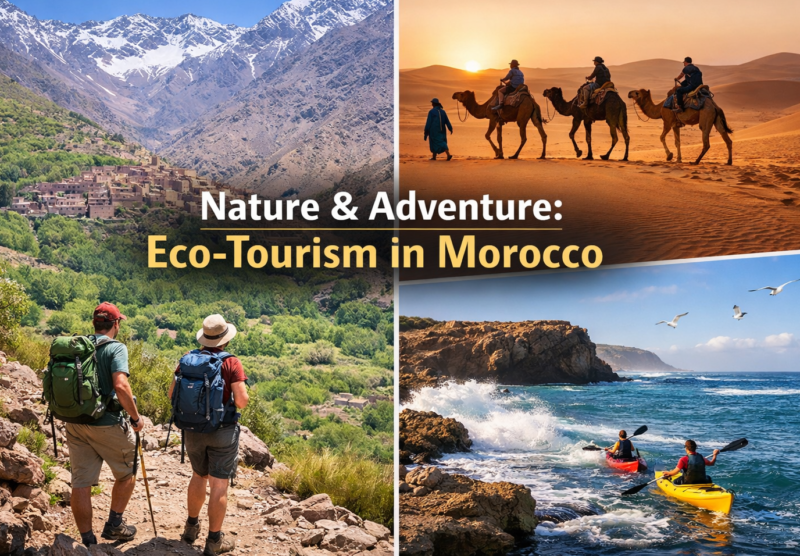
The dawn light catches snow on Jebel Toubkal’s summit as our Berber guide Hassan points to fresh mouflon tracks crossing yesterday’s path, the wild sheep descending from higher elevations to graze in alpine meadows the summer heat will soon render dormant. Below us, the Mizane valley drops through changing ecological zones from this 3,000-meter alpine landscape through oak forests and juniper stands to irrigated agricultural terraces surrounding Imlil village where our trek began three days earlier. This vertical journey through ecosystems demonstrates Morocco’s extraordinary biodiversity compressed into landscapes that reward slow travel, minimal impact, and local guides whose traditional knowledge interprets ecological relationships Western education often misses.
Morocco’s nature-based tourism potential extends far beyond the Atlas Mountains to encompass Sahara desert ecosystems, coastal wetlands, remnant cedar forests, river gorges, and marine environments creating opportunities for eco-adventures combining physical challenge, environmental education, and conservation support. Having led countless treks, desert expeditions, and coastal programs over two decades while training local guides in environmental interpretation and low-impact practices, I’ve watched Morocco’s adventure tourism evolve from basic mountain trekking to sophisticated eco-adventure offerings integrating conservation, community benefit, and authentic natural experiences.
This guide explores Morocco’s nature and adventure eco-tourism landscape with specific destinations, seasonal considerations, responsible practices, and analysis of how adventure tourism can support rather than damage the remarkable ecosystems attracting travelers.
High Atlas Mountains trekking and alpine experiences
The High Atlas represents Morocco’s premier mountain adventure destination, with North Africa’s highest peaks, traditional Berber villages practicing sustainable mountain agriculture, diverse ecosystems supporting endemic species, and cultural landscapes shaped by millennia of human-environment interaction creating integrated natural-cultural experiences.
Toubkal National Park protects 380 square kilometers surrounding Jebel Toubkal (4,167 meters), North Africa’s highest peak, with habitats ranging from drought-resistant scrubland at lower elevations through juniper and oak woodlands to alpine meadows and rocky summits. The park supports populations of Barbary sheep (mouflon), wild boar, jackals, numerous raptors including golden eagles, and significant botanical diversity with over 500 plant species including many endemics.
Trekking Toubkal responsibly requires hiring local guides from Imlil cooperative, staying in village guesthouses rather than carrying camping equipment that requires fuel wood collection impacting juniper forests, packing out all waste including toilet paper and organic food scraps that decompose slowly in high-altitude conditions, staying on established trails preventing erosion on fragile alpine soils, and respecting seasonal grazing patterns by not disturbing livestock or damaging traditional stone walls protecting agricultural terraces.
The classic Toubkal ascent covers two days from Imlil to Toubkal refuge and summit return, though three to four day itineraries allow better acclimatization and visiting surrounding valleys. Guide fees of $40 to $60 per day plus refuge or guesthouse accommodation at $25 to $40 per person half-board create accessible mountain adventures while ensuring local economic benefits. The summer season from June through September provides most reliable weather though also heaviest tourist traffic, while spring and autumn offer fewer crowds with variable conditions requiring flexibility.
M’Goun Massif offers more remote trekking with fewer tourists, spectacular geology including deep gorges and plateau landscapes, traditional Berber villages maintaining authentic mountain lifestyles, and more challenging navigation requiring experienced local guides. The region’s limited tourism infrastructure means more basic accommodations and authentic cultural experiences as villages see fewer visitors and maintain traditional practices without tourism modification.
Multi-day M’Goun treks traverse changing landscapes from arid valley floors through agricultural terraces to high passes over 3,000 meters, staying in village guesthouses or basic mountain refuges, and requiring good fitness and comfort with basic conditions. The region’s lower tourist traffic creates opportunities for genuine cultural exchange and environmental experiences without crowds, though the limited infrastructure suits adventurous travelers comfortable with uncertainty and basic amenities.
Sirwa Massif in the Anti-Atlas provides alternative mountain experiences with different geology, more arid ecology, traditional Berber villages, and saffron cultivation creating unique agricultural landscapes. The region’s volcanic origins create dramatic rock formations, while lower rainfall creates desert-like conditions supporting drought-adapted flora and fauna distinct from higher Atlas ecosystems.
Sirwa trekking combines mountain landscapes with cultural experiences including saffron harvest participation in autumn, traditional irrigation system observation, and craft cooperative visits in valley villages. The region receives minimal tourism creating authentic experiences while supporting community tourism initiatives in economically marginal areas where agricultural income alone proves insufficient for sustaining rural populations.
Middle Atlas cedar forests and wildlife experiences
The Middle Atlas mountains support Morocco’s most significant remaining cedar forests, with Cedrus atlantica (Atlas cedar) creating distinctive ecosystems supporting unique wildlife including Morocco’s largest Barbary macaque populations, providing critical watershed functions, and facing pressures from logging, grazing, and climate change.
Ifrane National Park protects 500 square kilometers of cedar forest, lakes, and mountain landscapes, with accessibility from the resort town of Ifrane making it Morocco’s most visited protected area. The park’s Barbary macaque population represents one of North Africa’s largest, with roadside viewing opportunities at sites including Azrou cedar forest where habituated troops allow photography though feeding disrupts natural behaviors and creates human-wildlife conflict.
Responsible wildlife viewing requires maintaining distance, not feeding monkeys despite their begging behaviors learned from irresponsible tourists, hiring park guides who provide ecological interpretation while ensuring appropriate viewing distances, supporting park conservation through entrance fees and donations, and educating others about appropriate behavior when witnessing feeding or harassment.
The park’s hiking trails provide alternatives to roadside macaque viewing, with routes through cedar forests, around mountain lakes, and to viewpoints offering ecological interpretation about cedar forest ecology, watershed importance, climate change impacts, and conservation challenges. Spring brings wildflower displays and bird migration, while autumn colors and winter snow create seasonal attractions beyond summer’s dry season hiking.
Azrou cedar forests outside park boundaries face greater pressures from logging and grazing while providing important macaque habitat and recreational opportunities. The forests’ accessibility makes them popular for day visits from Fes or Meknes, creating management challenges as tourism pressure concentrates along roads while forest interior receives minimal visitation and protection.
Community-based eco-tourism initiatives around Azrou demonstrate alternatives to exploitative wildlife viewing, with local guides providing forest ecology interpretation, traditional knowledge about cedar uses in Berber culture and medicine, and advocacy for forest conservation based on economic value from sustainable tourism rather than extractive logging. Supporting these initiatives through hiring local guides and purchasing locally-produced crafts provides tangible conservation incentives while creating more meaningful experiences than roadside monkey photography.
Sahara Desert eco-adventures and oasis experiences
The Sahara Desert’s fragile ecosystems require particularly careful eco-tourism practices, with the most responsible desert adventures emphasizing traditional nomadic culture, low-impact camping, and economic benefits to communities maintaining desert lifestyles despite sedentarization pressures.
Erg Chigaga dunes near M’hamid offer Morocco’s most remote accessible dune experiences, requiring 4×4 transport or multi-day camel treks from M’hamid oasis through desert landscapes including dry lakes, stone desert, and finally the impressive sand dunes rising over 60 meters. The remoteness creates more authentic desert experiences than more accessible Erg Chebbi dunes near Merzouga, though requiring more time, higher costs, and comfort with genuine wilderness conditions.
Responsible Erg Chigaga adventures prioritize camel trekking over motorized transport when possible, use solar-powered camps with proper waste management and water conservation, employ local guides and camel handlers from M’hamid and surrounding areas, respect nomadic communities through appropriate compensation for encounters and purchases of traditional crafts, minimize campfire use conserving desert vegetation, and implement pack-out policies for all non-biodegradable waste.
Multi-day camel treks from M’hamid create low-impact desert experiences following traditional nomadic routes, camping in locations used for generations, and hiring handlers whose traditional knowledge about desert ecology, navigation, and resource management provides insights impossible with motorized tours focused on reaching destinations efficiently. The slow pace allows observing desert ecology including tracks, signs of wildlife, desert vegetation adapted to extreme aridity, and geological features revealing the region’s climatic history.
Draa Valley oases provide transitions between mountain and desert ecosystems, with traditional irrigation systems (khettaras), date palm cultivation, and kasbah architecture creating cultural landscapes shaped by centuries of desert agriculture. The oases face increasing pressures from groundwater depletion, sand encroachment, and rural-urban migration threatening traditional oasis management systems.
Eco-tourism supporting oasis preservation includes staying in kasbah guesthouses providing income for maintaining traditional architecture, participating in date harvest activities creating economic value for traditional agriculture, hiring local guides to explain traditional irrigation systems and oasis ecology, purchasing dates and traditional crafts directly from oasis producers, and supporting oasis conservation initiatives addressing environmental threats.
Jebel Saghro provides desert mountain trekking combining arid mountain landscapes, traditional nomadic culture, geological interest including volcanic formations, and spectacular scenery without the tourist numbers concentrated around higher Atlas peaks. The Ait Atta Berber communities maintain semi-nomadic pastoralism, creating opportunities for cultural exchange while supporting livelihoods threatened by modernization and climate change.
Multi-day Saghro treks traverse changing landscapes from valley oases through arid mountain ranges to high passes, staying in village guesthouses or camping in traditional nomadic patterns, and requiring flexibility with basic conditions and comfort with isolation as the region’s limited tourism means minimal infrastructure. The cultural dimension emphasizes Ait Atta history, traditional pastoralism, and desert ecological knowledge as guides interpret landscapes through traditional knowledge systems.
Atlantic coast marine and coastal experiences
Morocco’s Atlantic coastline supports diverse coastal and marine ecosystems facing pressures from development, overfishing, pollution, and inappropriate tourism while offering opportunities for marine eco-tourism supporting conservation and coastal community livelihoods.
Souss-Massa National Park protects 338 square kilometers of coastal ecosystems including wetlands, estuaries, beaches, and interior areas supporting crucial biodiversity. The park serves as important breeding and migratory bird habitat with over 250 species recorded including endangered northern bald ibis, flamingos, and numerous waterbirds using coastal wetlands as stopover points during migration.
Responsible park visitation includes hiring park-certified guides who provide ecological interpretation while ensuring appropriate viewing distances, supporting park conservation through entrance fees and donations to specific conservation programs, participating in beach cleanup or other conservation volunteer opportunities when available, avoiding disturbing nesting birds particularly during breeding seasons, and educating others about coastal ecosystem importance and conservation challenges.
The park’s guided tours typically cost 100 to 200 dirhams ($10 to $20) per person including transportation and guide services, with specialized birding tours commanding higher fees reflecting guides’ specialized knowledge. The winter season brings greatest bird diversity as European migrants escape northern winters, while spring and autumn migrations create peak activity periods.
Surf eco-camps along the coast from Essaouira to Sidi Ifni combine surf instruction with environmental education, beach conservation, and community engagement. The best operations implement plastic-free policies, organize regular beach cleanups involving guests and local communities, support marine conservation initiatives, and integrate environmental education about ocean ecology and conservation into surf instruction.
Participating responsibly includes choosing operators demonstrating genuine environmental commitments rather than greenwashing marketing, participating in beach cleanup and conservation activities, minimizing plastic consumption and properly disposing of any waste, respecting local fishing communities and their traditional ocean access, and supporting local economies through purchasing from community suppliers.
Marine wildlife experiences including whale and dolphin watching require careful regulation to prevent harassment and disturbance, with responsible operators maintaining appropriate distances, limiting time near animals, avoiding approaching mothers with young, and providing education about marine mammal behavior and conservation rather than just entertainment. The Essaouira region offers whale watching opportunities during migration seasons, with responsible operators following guidelines protecting marine mammals while providing sustainable livelihoods for boat operators transitioning from fishing as stocks decline.
National parks and protected areas
Morocco’s protected area network covers over 10 percent of land area, though management capacity varies significantly with some parks receiving substantial resources and tourist visitation while others remain “paper parks” with limited on-ground management. Eco-tourism provides crucial revenue and political support for conservation while creating economic incentives for local communities to support rather than resist protection.
Toubkal National Park (discussed above) receives greatest visitation and management attention, with established infrastructure, trained guides, and conservation programs addressing tourism impacts, grazing pressure, and endemic species protection.
Talassemtane National Park in the Rif Mountains protects one of Morocco’s last significant fir forests (Abies morocana), with endemic fir species, unique biodiversity, and spectacular mountain landscapes. The park’s proximity to Chefchaouen creates day-hiking opportunities while multi-day treks explore more remote areas with basic guesthouse accommodation in park villages.
Park visitation supports conservation while providing income for communities historically dependent on forest resources including charcoal production and grazing that degraded ecosystems. Eco-tourism creates alternatives demonstrating that intact forests generate sustainable income through guiding, accommodation, and craft sales rather than extractive uses providing short-term income but long-term environmental degradation.
Iriqui National Park protects desert and pre-Saharan ecosystems near M’hamid, with important habitat for endangered species including Dorcas gazelle and migratory birds using seasonal wetlands. The park receives minimal visitation despite spectacular landscapes, creating opportunities for genuine wilderness experiences while supporting conservation initiatives in underfunded protected areas.
Responsible adventure tourism practices
Nature-based eco-tourism supports conservation and communities when travelers follow responsible practices minimizing environmental impacts while maximizing local benefits:
Leave no trace principles: Pack out all waste including toilet paper and organic food scraps, use designated campsites or traditional camping areas rather than creating new sites, minimize campfire use protecting desert and mountain vegetation, stay on established trails preventing erosion and vegetation damage, and respect wildlife by maintaining distance and avoiding disturbance.
Local guide employment: Hire local guides from village or park cooperatives ensuring community benefits, pay fair wages rather than bargaining guide fees, tip appropriately for good service and specialized knowledge, and recognize guides’ traditional ecological knowledge as valuable as formal environmental education.
Minimize resource consumption: Conserve water recognizing scarcity in mountain and desert environments, avoid fuel wood collection preferring camp stoves or solar cookers, minimize waste through careful planning and reusable containers, and consider environmental impacts when choosing activities and itineraries.
Support conservation: Pay park entrance fees and consider additional donations to conservation programs, participate in citizen science programs when available including wildlife monitoring or trail maintenance, report environmental damage or inappropriate behaviors to park authorities, and advocate for conservation through sharing experiences and supporting conservation organizations.
Cultural respect: Follow local guides’ instructions regarding cultural sensitivities, ask permission before photographing people or private property, respect agricultural lands and traditional resource use areas, avoid disturbing livestock or traditional grazing patterns, and approach cultural encounters with genuine respect rather than extractive tourism attitudes.
Morocco’s nature and adventure eco-tourism potential extends far beyond mountains and deserts to encompass coastal, forest, and wetland ecosystems creating comprehensive eco-adventure opportunities when travelers choose responsible operators, follow minimal impact practices, and prioritize conservation support and community benefit alongside personal adventure experiences.
Combine nature adventures with community-based tourism experiences and sustainable accommodations for comprehensive responsible Morocco journeys, or return to our complete eco-tourism guide for broader sustainable travel context.