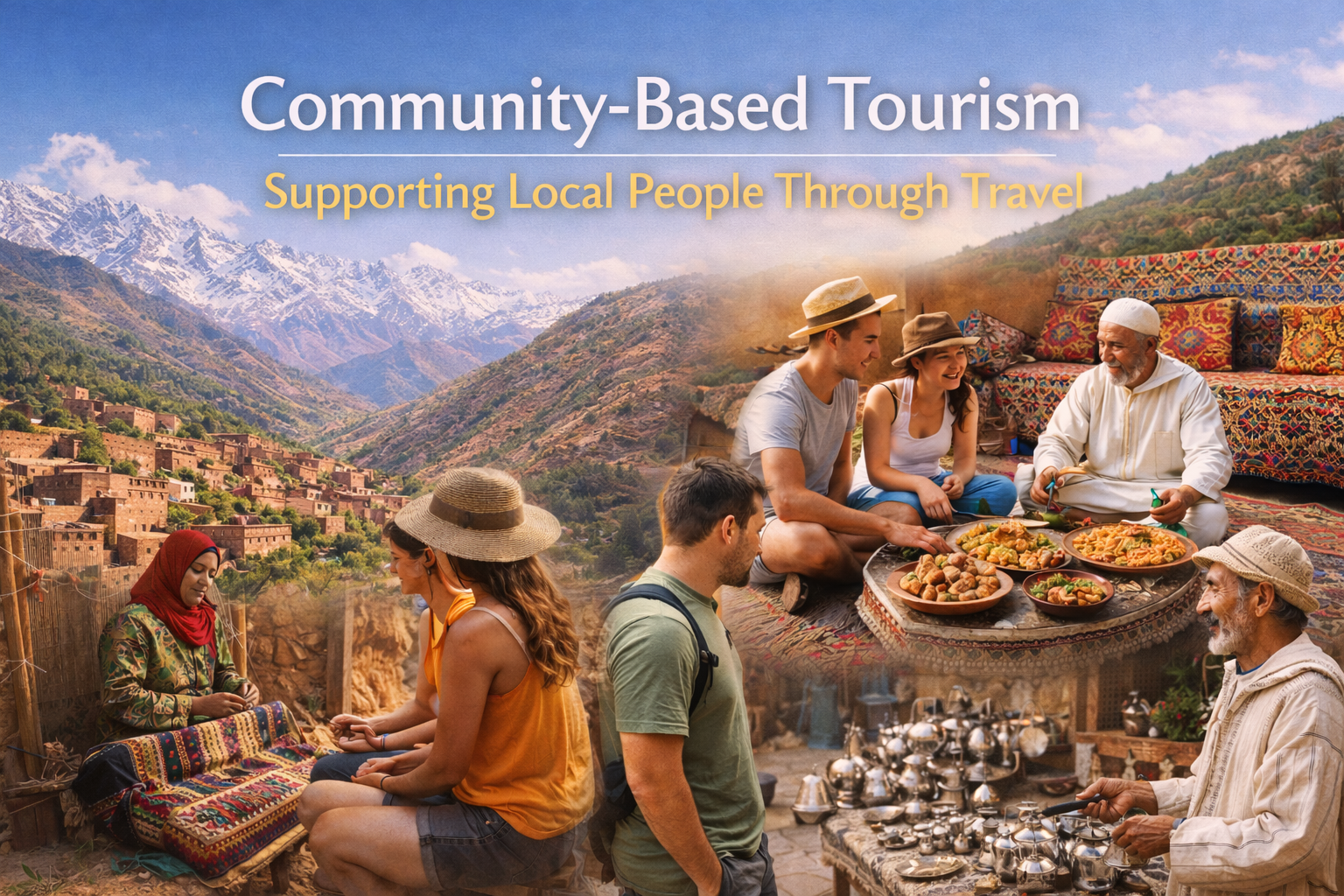
The dirt road climbing into the M’Goun valley ends at Ahmed’s family compound where his mother Fatima supervises dinner preparation while his daughters practice French phrases they’ll use greeting tonight’s trekking guests. The family’s guesthouse generates income keeping Ahmed’s sons in the valley rather than migrating to Marrakech construction sites, funds his daughters’ education through high school rather than marriage at fourteen, and provides Fatima unprecedented economic independence through managing household finances formerly controlled exclusively by men. This scene repeated across hundreds of Atlas Mountain villages represents community-based tourism’s transformative potential when local control, fair compensation, and cultural respect replace extractive tourism models.
Having helped establish community tourism networks throughout Morocco’s rural regions over twenty years—from training village guesthouse operators to developing quality standards for guide cooperatives, from supporting women’s argan cooperatives to facilitating community tourism marketing—I’ve witnessed both the profound benefits of community-controlled tourism and the challenges requiring ongoing support, capacity building, and conscious traveler participation to sustain.
This guide explores Morocco’s community-based tourism landscape with specific examples, practical guidance for travelers, and analysis of the social, economic, and cultural impacts when tourism development remains firmly under local community control rather than external investors or commercial operators.
Understanding community-based tourism in Morocco
Community-based tourism in Morocco means local people control tourism development affecting their communities, with ownership, management, and economic benefits remaining primarily at the local level rather than extracting to urban centers or international companies. This model contrasts fundamentally with conventional tourism where external investors develop hotels or tour operations, employ locals in low-wage service positions, and extract profits while leaving communities with minimal benefits and maximum impacts from environmental degradation, cultural commodification, and seasonal employment instability.
The Moroccan interpretation emerged organically from rural communities facing economic pressures as agricultural incomes declined, younger generations migrated to cities, and traditional knowledge and cultural practices lost value in modernizing society. Villages in the High Atlas particularly pioneered community tourism in the 1990s, realizing that their perceived “backwardness”—traditional architecture, subsistence agriculture, Berber language and culture—held value for tourists seeking authentic experiences unavailable in conventional tourism destinations.
The movement gained momentum through grassroots organizations including Moroccan associations like GTAM (Great Atlas Traverse Association of Morocco) that connected villages, established quality standards, provided training, and created marketing platforms while maintaining community ownership and control. International support from organizations including USAID, Swiss cooperation, and various NGOs provided technical assistance and funding without demanding ownership or control, allowing communities to develop tourism on their own terms.
The economic structure ensures benefits remain local through village-owned guesthouses where families receive full payment for accommodation and meals, guide cooperatives distributing guiding income equitably among members, artisan cooperatives controlling production and pricing for traditional crafts, and local supply chains prioritizing valley-grown food and locally-produced supplies. This structure creates economic multiplier effects where tourism spending circulates within communities rather than leaking to urban suppliers or foreign corporations.
The cultural dimension emphasizes authentic exchange over performance, with travelers participating in daily life rather than watching staged cultural shows, eating family meals rather than hotel buffets, hearing personal stories rather than guide scripts, and developing relationships extending beyond commercial transactions. This authenticity benefits travelers through deeper understanding and meaningful experiences while providing communities cultural validation and pride in traditions modernization often devalues.
Village guesthouse networks in the Atlas Mountains
The Atlas Mountains contain Morocco’s most developed community guesthouse systems, with valleys including Ait Bouguemez, Azzaden, M’Goun, Mgoun, and Todra offering networks of family-run accommodations providing authentic mountain experiences while generating crucial rural income.
Ait Bouguemez valley, often called Morocco’s “Happy Valley,” demonstrates mature community tourism with over thirty family guesthouses offering comfortable basic accommodation, home-cooked meals, and genuine Berber hospitality. The guesthouses maintain traditional architecture using pisé (rammed earth) construction, feature central courtyards where families and guests share meals and tea, and employ extended family members creating stable rural employment. Rates typically range from $25 to $40 per person for half-board (dinner, breakfast, and accommodation), with families receiving full payment supporting households of eight to twelve people.
The valley’s guide cooperative ensures equitable distribution of guiding opportunities among trained members, with multi-day treks from $30 to $50 per day including guide services but not accommodation or meals, allowing travelers to hire guides while staying with different families along trekking routes. The cooperative structure prevents competition from fragmenting the community while maintaining quality through peer accountability and shared reputation.
M’Goun valley offers more rustic community tourism with basic guesthouses in villages experiencing less tourist traffic than Ait Bouguemez, creating opportunities for travelers seeking immersive experiences with minimal tourist infrastructure. The remoteness means families maintain traditional lifestyles with limited modernization, providing authentic insights into mountain agriculture, shepherding, and seasonal rhythms determining valley life. The limited infrastructure suits adventurous travelers comfortable with basic amenities, shared bathrooms, and cultural immersion requiring patience with language barriers and cultural differences.
Azzaden valley near Imlil provides community guesthouse experiences within easy access of Toubkal National Park, combining village tourism with trekking opportunities including Morocco’s highest peak. The valley suffered significant earthquake damage in 2023, with community tourism providing essential economic recovery as families rebuild and resettle. Supporting Azzaden valley guesthouses directly contributes to earthquake recovery while providing authentic mountain experiences in communities demonstrating remarkable resilience.
The community guesthouse experience typically includes simple comfortable rooms with traditional Berber décor, shared or private bathrooms depending on property, excellent home-cooked meals featuring valley-grown ingredients, family interaction and cultural exchange, participation in daily activities like bread-making or animal care if interested, and genuine hospitality expressing Berber traditions of welcoming strangers. The basic amenities include reliable beds and blankets, adequate heating in cold seasons, clean facilities, and abundant food, though luxury expectations regarding amenities, hot water reliability, or extensive menus prove inappropriate given the simple infrastructure and authentic character.
Women’s cooperatives and gender-focused tourism
Women’s cooperatives represent particularly important community tourism elements, creating income and empowerment for women who traditionally had extremely limited economic opportunities outside household labor and unpaid agricultural work. The cooperative model provides collective bargaining power, skill development, market access, and social support while allowing women to maintain cultural norms around modesty and family responsibilities.
Argan oil cooperatives in the Essaouira and Agadir regions demonstrate the model’s success, with women controlling all aspects of production from harvesting argan nuts to processing oil using traditional stone-grinding methods to packaging and direct sales. The cooperatives welcome visitors to observe production processes, purchase directly from producers at fair prices, and learn about argan forest ecology and traditional Berber knowledge about argan uses for food, cosmetics, and medicine.
Visiting cooperatives provides authentic experiences while ensuring purchases benefit producers rather than commercial middlemen who traditionally captured majority of value in argan oil trade. Cooperative sales typically represent 50 to 70 percent higher income to women compared to selling raw nuts or oil to commercial buyers, while tourism visits create additional income through visitor fees and purchases. Prices for quality argan oil at cooperatives range from 150 to 300 dirhams ($15 to $30) per liter depending on quality and processing methods, with cosmetic oil and food oil having different prices reflecting different production standards.
Weaving and carpet cooperatives throughout the Atlas Mountains allow women to continue traditional textile arts while accessing markets for their production. The cooperatives typically occupy simple workshops where women work collectively, share childcare, provide mutual support, and market production collectively rather than relying on male family members or commercial intermediaries who historically exploited women’s limited negotiation power and market access.
Travelers can visit cooperatives to observe weaving techniques, understand natural dyeing processes, learn about regional design traditions, and purchase directly from weavers at prices reflecting fair compensation for the extensive labor involved in traditional textile production. A quality hand-woven Berber carpet may require 200 to 400 hours of work, justifying prices from 2,000 to 10,000 dirhams ($200 to $1,000) depending on size, complexity, and materials while ensuring weavers receive fair compensation rather than exploitation common in commercial carpet shops.
Culinary cooperatives allow women to monetize traditional cooking knowledge through providing meals to tourists, teaching cooking classes, and producing traditional foods for sale. These cooperatives create income from skills women already possess while building confidence and economic independence through participation in commercial economy formerly closed to most rural women.
The gender empowerment dimension extends beyond income to include increased decision-making power within households as women control cooperative income, delayed marriage age for daughters as families can afford extended education, reduced domestic violence as economic independence provides alternatives to abusive relationships, leadership development through cooperative governance, and broader social participation as women gain confidence and skills through cooperative membership.
Guide cooperatives and local employment
Guide cooperatives ensure that guiding income benefits local communities rather than urban-based commercial agencies that hire and underpay local guides while extracting majority of client payments. The cooperative structure distributes guiding opportunities equitably among members, maintains quality through training and peer accountability, provides collective marketing and booking services individual guides lack capacity to manage, and creates career paths allowing young people to remain in their communities rather than migrating to cities.
Imlil guide cooperative serves as the model for mountain guiding organization, with trained guides offering everything from half-day valley walks to multi-day Toubkal ascents and Atlas traverse treks. The cooperative maintains standards through required training in guiding skills, first aid, environmental practices, and cultural interpretation, with members sharing knowledge and supporting each other’s development. Guide fees range from $40 to $60 per day depending on trek difficulty and group size, with fees paid directly to guides rather than through intermediaries taking commissions.
Desert guide cooperatives in towns including Merzouga, M’hamid, and Zagora connect travelers with local guides possessing traditional desert knowledge passed through generations of nomadic heritage. These guides provide not just route-finding but cultural interpretation about nomadic lifestyles, desert ecology, traditional navigation and resource management, and authentic connections to nomadic communities impossible when hiring urban-based commercial operators.
The economic impact of hiring local cooperative guides rather than commercial agency guides means approximately three times more money remains in local communities, with guides supporting extended families and purchasing supplies locally rather than guide fees enriching distant agency owners. The cultural impact includes preserving traditional knowledge as guiding creates economic value for skills like reading desert landscapes or traditional navigation that otherwise lose relevance in modernizing societies.
Artisan cooperatives and direct purchase opportunities
Artisan cooperatives throughout Morocco allow travelers to purchase traditional crafts directly from makers rather than commercial shops where middlemen capture majority of value while artisans receive minimal compensation. The cooperative structure provides collective marketing, quality control, skill transmission to younger generations, and fair pricing reflecting actual production costs and fair labor rather than exploitative traditional supply chains.
Pottery cooperatives in areas including Safi and the Rif Mountains demonstrate traditional ceramic techniques passed through generations, with visitors observing potters throwing clay on manual wheels, hand-painting intricate geometric and floral designs, and firing pieces in traditional kilns. Direct purchase ensures potters receive fair compensation while travelers gain understanding of production processes and cultural contexts impossible when purchasing from commercial shops filled with industrial imports marketed as traditional Moroccan crafts.
Leatherworking cooperatives in cities including Fes and Marrakech allow travelers to observe traditional tanning and leatherworking while purchasing directly from artisans. The cooperatives provide alternatives to aggressive commercial leather shops that use high-pressure tactics, misleading quality claims, and exploitative pricing targeting tourists lacking knowledge to evaluate quality or fair prices.
Metalwork cooperatives continue traditional copper-smithing, silver-smithing, and iron-working techniques, with artisans creating traditional items including tea services, lanterns, jewelry, and decorative pieces using centuries-old techniques. Direct cooperative purchases ensure artisans receive fair compensation while supporting skill transmission to younger generations who might otherwise abandon traditional trades for more lucrative but less culturally meaningful urban employment.
Participating responsibly in community tourism
Successful community tourism requires conscious traveler behaviors respecting cultural norms, managing expectations appropriately, and approaching interactions with genuine respect rather than extractive tourism attitudes:
Cultural sensitivity: Dress modestly particularly in rural areas, with shoulders and knees covered and consideration that ultra-conservative interpretations of modesty make leggings or tight clothing inappropriate despite covering skin. Learn basic greetings and courtesy phrases in Darija Arabic or Tamazight Berber demonstrating respect for local languages. Ask permission before photographing people, with understanding that some may decline or expect small compensation. Respect prayer times and Ramadan fasting, with awareness that eating, drinking, or smoking publicly during Ramadan daylight hours disrespects community norms.
Realistic expectations: Understand that community guesthouses provide basic comfort rather than luxury amenities, with occasional issues regarding hot water, electricity reliability, or other infrastructure reflecting remote locations and limited resources rather than poor service. Appreciate authentic experiences over tourist performances, recognizing that genuine cultural exchange involves patience with language barriers, flexibility with schedules reflecting agricultural rhythms rather than tourist convenience, and openness to experiences that may challenge comfort zones.
Economic fairness: Pay agreed prices without bargaining for community tourism services like guesthouse accommodation or guide fees, understanding that prices already reflect fair compensation rather than inflated tourist pricing subject to negotiation. Tip appropriately for good service, with 10 to 20 percent additional beyond agreed rates reflecting appreciation for hospitality and service quality. Purchase handicrafts at cooperative asking prices recognizing that prices reflect fair labor compensation rather than inflated commercial pricing.
Environmental responsibility: Conserve water and energy respecting resource scarcity in mountain and desert communities, minimize waste by refusing single-use plastics and carrying reusable containers, respect agricultural lands and natural areas by staying on paths and following guide instructions, and support environmental initiatives when communities implement conservation programs.
Meaningful engagement: Approach cultural exchange with genuine curiosity and respect rather than extractive tourism attitudes, engage in real conversations rather than superficial interactions focused solely on photographs, participate in community activities when invited while respecting boundaries when participation would be intrusive, and consider ongoing relationships through supporting community projects or maintaining contact beyond single visits.
Community-based tourism represents Morocco’s most authentic and impactful tourism model, creating genuine benefits for rural communities while providing travelers with meaningful experiences impossible in conventional tourism settings. Your participation validates community efforts, encourages others to develop similar initiatives, and demonstrates that tourism can empower rather than exploit when control and benefits remain with local communities.
Return to our comprehensive eco-tourism guide for broader sustainable travel context, or explore our detailed guide to nature and adventure eco-tourism for combining community tourism with outdoor experiences.