
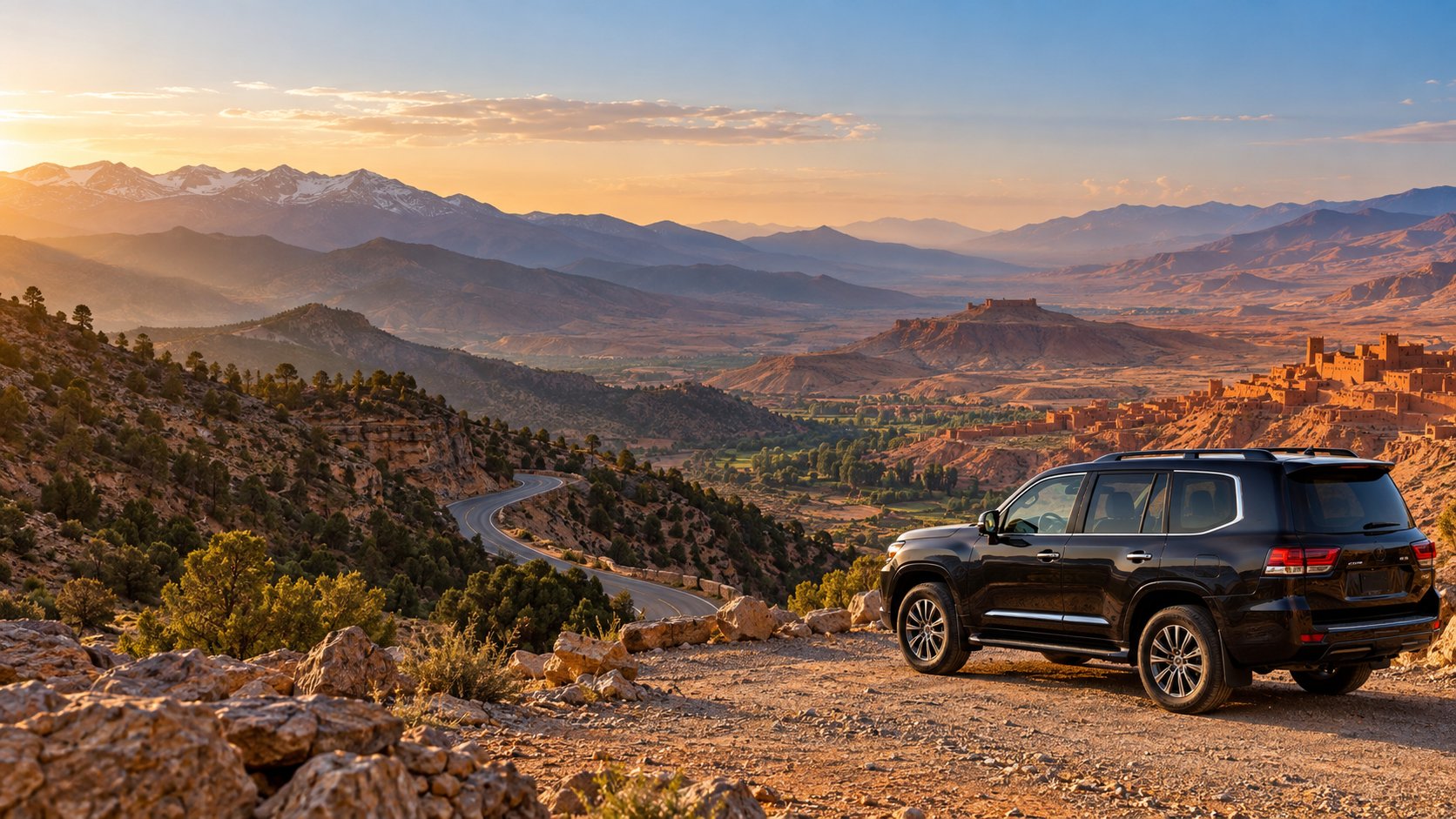
A private Morocco tour gives you a dedicated vehicle, a route designed around your interests and more control over the pace of each day. Instead of adapting your holiday to a fixed group departure, you choose where the trip begins, how long you stay in each region and which experiences deserve more time.
The best private tours are not simply standard packages with a higher price. They connect Morocco’s imperial cities, mountains, Atlantic coast and desert in a way that makes sense for your dates and energy level. They also state clearly what is included, who will guide you and which parts of the itinerary can change.
Planning a trip to Morocco? Request a custom itinerary based on your dates, arrival city, interests and preferred accommodation style.
What is a private Morocco tour?
A private Morocco tour is a multi-day trip operated exclusively for you and the people travelling with you. It normally includes a private vehicle and professional driver for the agreed route. Accommodation, local guides, meals and activities may also be included, depending on the written proposal.
“Private” and “guided” do not always mean the same thing. A driver manages the road journey and transfers. A licensed local guide may join you for a detailed visit to a medina, monument or heritage site. On a well-designed tour, each person’s role is explained before you book.
Private tour versus group tour
| Private tour | Group tour |
|---|---|
| Route can be adapted to your party | Route and stops are normally fixed |
| Departure times can be more flexible | The group follows a shared timetable |
| Vehicle is reserved for your party | Transport is shared with other travellers |
| Accommodation level can be selected | Hotel category is predetermined |
| Higher total cost, especially for solo travellers | Usually lower cost per traveller |
| Better fit for families, couples and special interests | Useful for social travel and fixed budgets |
A private tour does not mean that every request can be changed at the last minute. Driving time, hotel availability, weather, local opening hours and safety still shape the day. The advantage is that these constraints can be considered during planning rather than discovered after departure.
Why choose a tailor-made Morocco trip?
Morocco rewards travellers who balance ambition with time. On a map, Fes, the Sahara, Marrakech and the Atlantic coast may look easy to combine. In reality, mountains, road conditions and worthwhile stops can turn a transfer into a full travel day. A tailor-made plan helps you decide what to include and, just as importantly, what to leave for another visit.
Travel at a pace that suits you
Some travellers enjoy early departures and full sightseeing days. Others want long breakfasts, time in a riad and only one major activity each day. Families may need shorter stages. Photographers may want to reach a landscape at a particular time. A private itinerary can reflect those priorities from the beginning.
Choose experiences that match your interests
A food-focused trip might include market visits and a cooking experience. A design itinerary could spend more time with architecture, zellige, textiles and artisan workshops. A first visit may prioritise Fes, Marrakech and the desert, while a returning traveller might prefer the Rif, the Atlantic coast or the oases of the south.
Select your accommodation style
“Luxury” can mean a landmark hotel, an intimate riad, a quiet suite, excellent food, a beautiful desert camp or simply more space and attentive service. A custom proposal lets you distribute the accommodation budget where it matters most instead of using one category for every night.
Keep the journey private
Private transport makes it easier to manage luggage, child seats requested in advance, mobility considerations and personal stops. Couples and families can travel together without coordinating with a larger group. Small groups can share the vehicle while keeping the trip exclusive to their party.
Choose your ideal Morocco route
The right route begins with your arrival and departure airports, the number of nights available and the experiences you consider essential.
Imperial Cities: history, architecture and medinas
Morocco’s four imperial cities are Fes, Marrakech, Meknes and Rabat. A route connecting them suits travellers interested in dynastic history, architecture, food and urban culture. The Moroccan National Tourist Office presents these cities as distinct stages rather than interchangeable stops, which is a useful planning principle: each deserves time rather than a quick photo stop.
Fes is particularly rewarding with a knowledgeable local guide. Its historic medina is recognised by UNESCO, and its dense lanes, religious buildings, workshops and neighbourhoods are easier to understand with context. Rabat offers a calmer capital-city experience, while Marrakech combines major monuments, gardens, souks and contemporary hospitality.
Fes and the Sahara: a journey through changing landscapes
The route from Fes toward Merzouga crosses the Middle Atlas and the Tafilalet region before reaching the Erg Chebbi area. The official Moroccan tourism site describes the Middle Atlas as a landscape of forests, lakes and volcanic plateaus, while Merzouga opens onto the desert environment. That contrast is a major part of the journey.
Three days provide the essential route, but the pace is demanding. Four or five days allow more time in the desert region and create better options for returning to Fes or continuing toward Marrakech. Compare the possibilities in our Fes to Merzouga desert tour guide.
Marrakech, the High Atlas and southern Morocco
From Marrakech, a southern route can cross the High Atlas toward the fortified villages, valleys and oasis landscapes around Ouarzazate, Skoura, Dades and the Drâa. This works well for travellers who want scenery and architecture alongside a city stay.
The Atlas is not merely a passage between destinations. Mountain weather and road conditions can affect timing, so the itinerary should include realistic margins rather than promising an exact minute-by-minute schedule.
Atlantic Morocco: cities, food and a slower rhythm
Essaouira, El Jadida and the coastal areas around Rabat and Casablanca can add sea air, seafood, architecture and a slower counterpoint to inland travel. An Atlantic extension is particularly useful when a traveller wants Morocco without several long desert transfers.
Northern Morocco: Tangier, Tetouan and Chefchaouen
The north works as a focused trip or as an extension from Fes. Tangier brings a layered port-city history; Tetouan offers Andalusian connections; Chefchaouen is known for its blue-toned old town and mountain setting. A northern route should allow for walking and atmosphere rather than treating every town as a short stop.
How many days do you need?
Five to six days: choose one region
With fewer than seven days, focus usually creates a better trip. Combine Marrakech with the Atlas and nearby valleys, or base the journey around Fes, Meknes and northern Morocco. A fast desert loop is possible from some cities, but it will include long road stages.
Seven to eight days: connect two regions
A week can combine Fes with Marrakech, add an imperial-city sequence or create a desert route with limited city time. The key decision is whether the Sahara is essential. If it is, protect enough time for the journey rather than squeezing it between short city stays.
Ten days: imperial cities and desert
Ten days can connect Casablanca or Rabat, Fes, Merzouga, the Dades region and Marrakech. This is a popular first-trip structure because it combines urban heritage with the Middle Atlas, desert and High Atlas landscapes. See our customisable ten-day luxury Morocco itinerary for a day-by-day example.
Twelve to fourteen days: travel more slowly
Two weeks allow extra nights in Fes or Marrakech, a calmer desert section and an Atlantic or northern extension. The benefit is not simply seeing more places. It is reducing one-night stays and creating time for experiences that are difficult to enjoy on transfer days.
What can be included in a private Morocco tour?
There is no universal inclusion list. Ask for a written, itemised proposal before paying a deposit.
Common inclusions may be:
- Private air-conditioned vehicle for the agreed itinerary.
- Professional driver and the driver’s travel expenses.
- Airport or railway-station pickup and drop-off when specified.
- Accommodation in the room category stated in the proposal.
- Breakfast and any additional meals explicitly listed.
- Licensed local guides in selected cities.
- A desert-camp stay and specified desert activity.
- Taxes, parking, tolls and fuel when stated.
Items that may be excluded include flights, travel insurance, lunches, drinks, entrance fees, optional activities, gratuities and personal purchases. Words such as “full package” are not a substitute for a detailed list.
Private driver or fully guided tour?
Many Morocco itineraries use a driver throughout the road journey and specialist local guides in historic cities. This approach combines continuity on the road with deeper destination knowledge where it is most useful.
A driver may share practical information and help coordinate the itinerary, but should not automatically be presented as a licensed guide. If you want continuous guiding, language support or expert interpretation throughout the trip, request that service explicitly.
Transport is often one of the largest variables in a custom proposal. Vehicle category, route, number of days and overnight logistics all matter. Our guide to Morocco private-driver costs and inclusions explains how to compare quotations fairly.
Who benefits most from private travel?
Couples and honeymooners
Private travel creates space for slower mornings, special meals and accommodation selected for atmosphere. It also makes it easier to avoid an itinerary dominated by group departure times.
Families
Families can request age-appropriate activities, shorter walking periods and room arrangements before booking. Parents should ask specifically about child seats, adjoining rooms, pool supervision, meal flexibility and the duration of each drive.
Senior travellers and guests with mobility needs
A private vehicle can reduce transfers and make rest stops easier. However, many traditional medinas and riads contain steps, uneven lanes or limited vehicle access. Share mobility requirements early so the route and accommodation can be checked rather than assumed accessible.
Food, craft and photography travellers
Special-interest trips benefit from fewer generic stops and more deliberate scheduling. The itinerary can reserve time for markets, workshops, landscapes or light conditions instead of trying to cover every headline attraction.
Small private groups
Friends or extended families can share transport while retaining their own itinerary. Confirm luggage capacity as carefully as seat count; a vehicle that fits the passengers may not fit large suitcases comfortably.
How much does a private Morocco tour cost?
There is no responsible single price for every private tour. The total changes with season, route, party size, vehicle, accommodation, room configuration, guides, meals and activities.
For a useful quote, provide:
- Exact or approximate travel dates.
- Number of adults and children, with children’s ages.
- Arrival and departure cities.
- Total number of nights.
- Essential destinations and experiences.
- Preferred accommodation level.
- Room arrangement.
- Dietary, mobility or accessibility requirements.
Compare proposals by total inclusions, not headline price alone. A lower quote may exclude city guides, entrance fees, desert activities or airport transfers. An itemised proposal makes the differences visible.
How custom trip planning works
1. Share your travel framework
Begin with dates, flight cities, party size and trip length. Add your priorities and anything you do not want. This prevents a planner from building an impressive-looking route that does not match your actual holiday.
2. Review the route and pace
Look at the number of hotel changes, long driving days and early starts. Ask what is optional and where an extra night would make the greatest difference.
3. Select stays and experiences
Confirm the actual room categories, meal plan and activity format. A named hotel is not enough if several room types differ significantly. Desert camps also vary, so request the practical details important to you.
4. Confirm the written inclusions
Before booking, check payment terms, cancellation conditions, pickup details, contact arrangements and the exact inclusion list. Keep the final itinerary accessible during the trip.
Ready to begin? Tell FesRoyal about your ideal Morocco trip and request a personalised proposal.
Responsible choices for a better trip
A well-paced itinerary is often more responsible as well as more enjoyable. Fewer rushed stops can mean less driving, longer stays with local accommodation providers and more meaningful time in each place.
Choose authorised guides where guiding credentials are required. Ask before photographing people or workshops. Dress and behave respectfully in religious and residential spaces. In desert and mountain environments, follow local instructions, minimise waste and avoid activities that compromise animal welfare.
Season also matters. Morocco’s tourism office notes the country’s varied coastal, mountain, continental and desert climates and identifies spring and autumn as particularly suitable for southern desert travel. A custom route should account for heat, cold nights, daylight and mountain conditions rather than using the same schedule year-round.
How to choose a private Morocco tour operator
A persuasive website is not enough. Before paying, check whether the company can translate its promises into a precise, workable proposal.
Look for a route that explains the pace
The itinerary should identify overnight locations and distinguish visits from transfers. Long drives are not automatically a problem; hidden long drives are. Ask for an approximate range of road time on the busiest days and find out which stops may be shortened if traffic, weather or daylight changes.
Be cautious when a route combines several major cities, a desert camp and the coast in too few nights. A private vehicle provides flexibility, but it cannot remove the distance between regions.
Request named accommodation or a clear standard
Ask for the proposed property, room category and meal plan. If the accommodation is “or similar,” find out what qualifies as similar and who approves a substitution. Check practical priorities such as stairs, lift access, pool season, air conditioning, heating, family-room configuration and distance from the vehicle drop-off.
Traditional riads can be atmospheric and personal, but their historic layouts differ from modern hotels. Some have open courtyards, narrow stairs or rooms with different sizes. The most appropriate stay depends on the traveller, not on a generic star label.
Verify guide and driver roles
The proposal should say where a licensed local guide is included, which language is provided and how long the visit lasts. It should also identify whether the same driver accompanies the full circuit. If the operator uses “driver-guide,” ask what guiding services are included and where a separate authorised guide will join.
Examine communication and payment terms
Professional planning should produce a written itinerary, price, currency, payment schedule and cancellation policy. Confirm the business name receiving payment and keep receipts. Ask how urgent issues are handled during the trip and which contact method is monitored.
No operator can eliminate every disruption. The meaningful question is whether it communicates limitations clearly and has a reasonable process for responding to changes.
Practical decisions before you confirm
Arrival and departure strategy
An open-jaw flight plan can save time. For example, arriving in Fes and departing from Marrakech may suit a desert route better than returning to the first city. Compare airfare and ground logistics together rather than choosing flights in isolation.
Allow sensible time between the end of a road circuit and an international departure. A final-night stay near the departure city reduces the risk created by a long same-day transfer.
Luggage and vehicle capacity
Tell the planner how many full-size cases, cabin bags, strollers or mobility devices the group will carry. Passenger capacity does not guarantee luggage capacity. For a multi-day tour, a slightly larger vehicle can be more valuable than a cosmetic upgrade.
Connectivity and money
Ask whether the vehicle offers charging and whether mobile coverage may be limited on parts of the route. Carry more than one payment method and some local currency for small purchases, while following current official travel guidance for money and customs rules.
Food and dietary needs
Share allergies and dietary requirements in writing. Clarify which meals are included and whether the selected accommodation can meet the request. On transfer days, meal timing may depend on the route, so discuss needs that cannot be handled with a late lunch.
Accessibility and health
Describe specific requirements rather than using only the word “accessible.” State maximum walking distance, stair limitations, shower needs, wheelchair dimensions or necessary rest frequency. Historic medinas, mountain terrain and desert camps require individual checking.
Travellers should arrange suitable insurance and seek professional medical advice for personal health questions. A tour operator can explain logistics but should not replace medical or official travel advice.
Sample private-tour styles
The first-time highlights journey
Combine Fes, a Sahara route and Marrakech over nine to twelve days. This format suits travellers who want cultural cities and landscape variety and are comfortable with a few long transfers.
The slow cultural itinerary
Choose two or three bases—perhaps Fes, Marrakech and the Atlantic coast—and add guided visits, food and craft experiences. This produces fewer hotel changes and more free time.
The family route
Use shorter driving stages, properties with suitable room configurations and flexible activities. Build downtime into the middle of the trip rather than waiting until everyone is tired.
The honeymoon or celebration trip
Prioritise distinctive rooms, privacy and a few memorable experiences instead of upgrading every component. Confirm celebration arrangements and inclusions rather than assuming the property has received the request.
The photography-focused journey
Plan around light, access and seasonal conditions. Fewer locations with repeat opportunities often work better than racing between famous viewpoints. Any photography involving people, religious spaces or private workshops should be handled respectfully.
Frequently asked questions
Can a Morocco tour be fully customised?
Most elements can be adapted before confirmation: route, duration, accommodation style, activities, start city and end city. Availability, road conditions, opening hours and safety constraints can limit individual requests.
Do private tours include a guide every day?
Not necessarily. Many tours include a driver for the full road itinerary and licensed local guides for selected cities. Ask the operator to identify each guided day and the role of every team member.
What is the best trip length for a first visit?
Seven to ten days works well for many first-time visitors. Seven days requires sharper choices; ten days makes it easier to combine imperial cities with the Sahara. Twelve to fourteen days provides a slower pace or an additional region.
Can a private tour start in Fes, Marrakech or Casablanca?
Yes, custom routes can usually begin in major arrival cities. The best start point depends on your flights and desired route. An open-jaw journey—arriving in one city and departing from another—can reduce backtracking.
Are private Morocco tours suitable for children?
They can be, particularly when driving stages, accommodation and activities are selected for the children’s ages. Confirm child seats, sleeping arrangements, pool safety and camel or adventure-activity restrictions before booking.
How far in advance should I enquire?
Earlier planning provides more accommodation choice, especially around popular travel periods. If dates are close, ask what is genuinely available rather than relying on a sample itinerary.
Is the Sahara included in every private tour?
No. Morocco offers excellent trips focused on cities, mountains, the Atlantic coast or the north. The Sahara should be included because it fits your priorities and available time, not because every itinerary must contain it.
Design your private Morocco tour
The strongest itinerary is not the one with the longest destination list. It is the one that connects your interests, time and comfort level into a coherent journey—and explains every important inclusion before you book.
Request your custom Morocco itinerary and share your dates, number of travellers, preferred route and accommodation style.