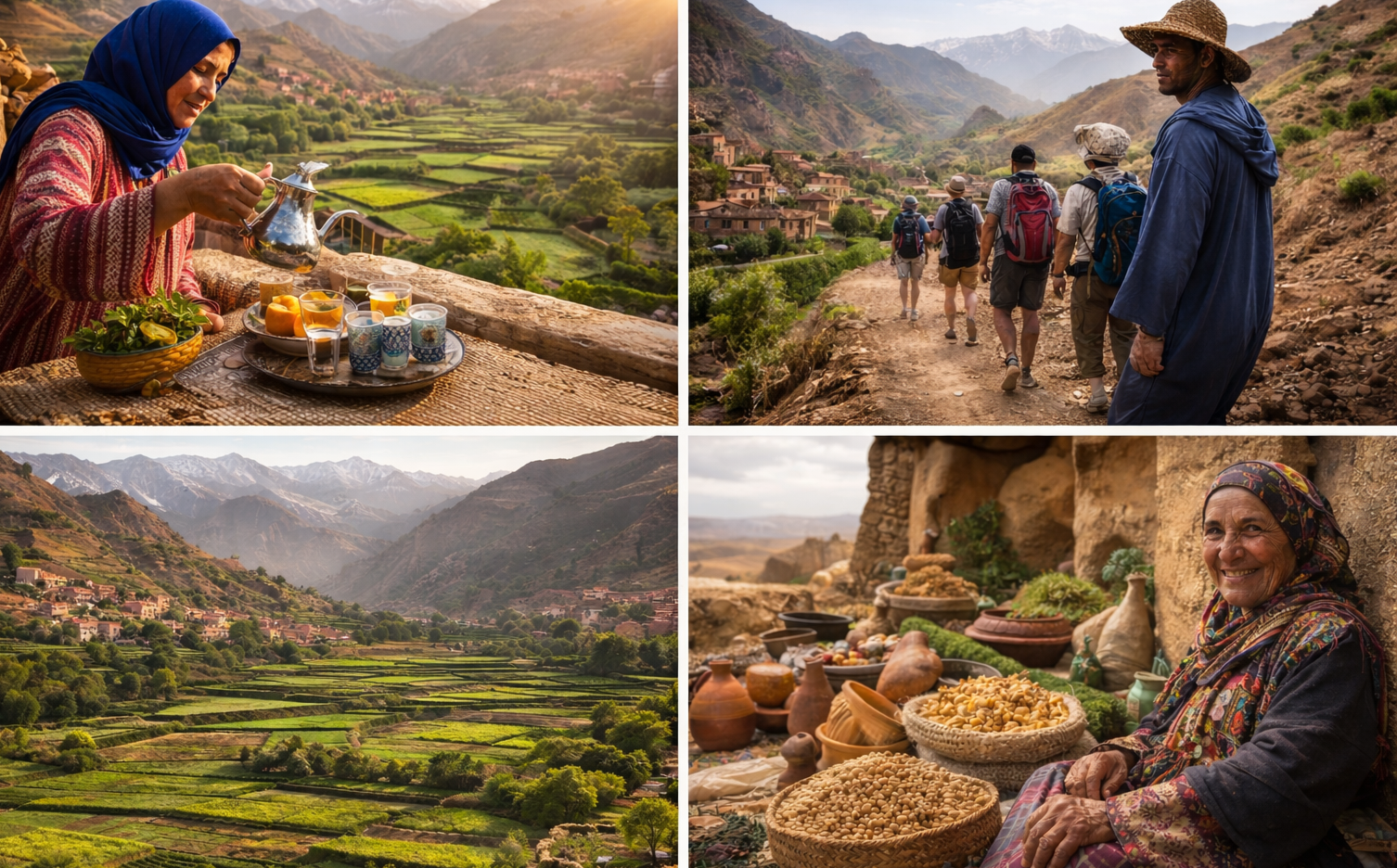
The morning sun illuminates the terraced fields of Ait Bouguemez valley as Fatima pours mint tea on the rooftop of her family guesthouse, a structure built entirely from local pisé clay using techniques passed down through five generations. Below, her husband Hassan prepares to guide a small group of trekkers through the High Atlas, following ancestral Berber paths that connect villages practicing agriculture unchanged for centuries. This scene represents the essence of eco-tourism in Morocco—authentic cultural exchange, environmental preservation, and economic benefits flowing directly to rural communities who serve as both guardians of the land and hosts to conscious travelers.
After spending two decades working with rural communities, conservation organizations, and sustainable tourism initiatives across Morocco, I’ve witnessed the kingdom’s transformation from viewing eco-tourism as a niche market to recognizing it as essential for protecting extraordinary biodiversity while providing alternatives to urban migration that empties mountain villages. Morocco possesses the natural and cultural assets to become North Africa’s premier eco-tourism destination, but achieving this potential requires travelers understanding what genuine sustainable tourism looks like beyond greenwashing marketing claims.
This comprehensive guide draws from years of field experience establishing community tourism projects in the Atlas Mountains, consulting with eco-lodge developers in the Sahara, and training local guides in responsible tourism practices. Whether you’re planning your first sustainable Morocco journey or seeking to deepen your understanding of the country’s eco-tourism landscape, this guide provides the knowledge to travel responsibly while creating meaningful impact.
Understanding eco-tourism in the Moroccan context
Eco-tourism in Morocco extends beyond staying in solar-powered accommodations or choosing hiking over motorized transport, encompassing a holistic approach that integrates environmental conservation, cultural preservation, and equitable economic distribution to local communities. The Moroccan interpretation emphasizes community-based tourism where villages and cooperatives control tourism development rather than external investors extracting profits while leaving environmental degradation and cultural commodification.
The country’s eco-tourism movement emerged organically from rural communities seeking alternatives to declining agricultural economies as climate change brought irregular rainfall and younger generations migrated to cities. Villages in the M’Goun valley, Ait Bouguemez, and the Anti-Atlas pioneered guesthouse networks in the 1990s, creating models where families hosted trekkers in traditional homes, providing authentic cultural exchange while generating income that kept young people in their ancestral villages.
This grassroots development differs fundamentally from conventional tourism models where international hotel chains dominate, employing local workers in low-wage service positions while profits flow overseas. Genuine Moroccan eco-tourism means staying with families who own and operate accommodations, hiring local guides from village cooperatives, purchasing handicrafts directly from artisan cooperatives, and eating meals prepared from valley-grown ingredients rather than imported supplies.
The environmental component addresses Morocco’s fragile ecosystems facing pressures from overgrazing, deforestation for fuel wood, climate change impacts, and inappropriate tourism development. Eco-tourism provides economic incentives for conservation, with communities protecting argan forests because cooperatives generate income from sustainable harvesting, or villages establishing protected areas around water sources that attract birdwatchers willing to pay guide fees supporting local economies.
Cultural preservation constitutes the third pillar, as eco-tourism values traditional knowledge, languages, and practices that modernization threatens. When travelers pay to learn traditional bread-making techniques from Amazigh women or hire elderly shepherds to explain medicinal plant uses during mountain hikes, they create economic value for cultural knowledge that might otherwise disappear as younger generations adopt urban lifestyles.
Why Morocco excels as an eco-tourism destination
Morocco’s extraordinary ecological diversity compresses Mediterranean, Alpine, desert, and coastal ecosystems within relatively compact geography, creating opportunities for comprehensive eco-tourism experiences impossible in more ecologically homogeneous destinations. The Atlas Mountains rise to over 4,000 meters, creating alpine zones with endemic species including Barbary macaques and Mouflon sheep, while traditional Berber villages practice sustainable mountain agriculture adapted over centuries to harsh conditions.
The Sahara Desert offers more than romantic dune landscapes, encompassing complex ecosystems of oases supporting traditional date cultivation, fossil-rich geological formations, and surprising biodiversity including desert foxes, gazelles, and migratory birds using oasis stopover points. Responsible desert tourism connects travelers to nomadic communities maintaining traditional pastoralism despite modern pressures, creating economic incentives for preserving mobile lifestyles and traditional ecological knowledge about desert resource management.
The Atlantic coast stretches over 1,800 kilometers with varied coastal ecosystems from wetlands attracting migratory birds to surf breaks surrounded by coastal villages where fishing communities explore sustainable tourism as alternatives to declining fish stocks. The emerging surf eco-camp movement demonstrates how coastal tourism can support environmental protection through beach cleanups, plastic reduction initiatives, and marine conservation education integrated into surf instruction.
The cultural dimension adds depth beyond natural attractions, with Morocco’s Amazigh (Berber) communities maintaining strong connections to ancestral lands and traditional practices that align naturally with eco-tourism principles. Unlike destinations where indigenous communities face displacement from conservation areas, Moroccan eco-tourism increasingly recognizes local populations as essential conservation partners whose traditional resource management sustained ecosystems for millennia before modern environmental science existed.
The kingdom’s political stability and developed tourism infrastructure provide practical advantages, with reliable transportation networks, established accommodation sectors, and government recognition of sustainable tourism’s importance demonstrated through national strategies and international partnerships. This stability allows eco-tourism development without the security concerns or infrastructure gaps challenging other African destinations.
Environmental protection and biodiversity conservation
Morocco contains remarkable biodiversity for its size, with over 24,000 identified species including numerous endemics found nowhere else globally. The varied topography and climate gradients create distinct ecological zones, from Mediterranean cork oak forests in the Rif Mountains to high desert steppes supporting unique drought-adapted flora and fauna.
The Atlas Mountains function as biodiversity hotspots, with different ranges supporting distinct ecosystems and endemic species. The High Atlas contains North Africa’s highest peaks and alpine meadows where traditional Berber pastoralism sustained grasslands while preventing overgrazing through customary resource management systems called agdal that rotate grazing areas seasonally. Eco-tourism supports these traditional systems by creating income for communities maintaining them rather than abandoning pastoralism for urban migration.
The argan tree forests of southwestern Morocco represent globally significant ecosystems supporting unique biodiversity while providing livelihoods for rural communities, particularly women who operate cooperatives processing argan oil using traditional methods. UNESCO designated the arganeraie a Biosphere Reserve recognizing the integrated conservation and sustainable development model where eco-tourism supports both forest protection and community prosperity.
The Sahara Desert ecosystems face increasing pressures from climate change, groundwater depletion, and inappropriate tourism development, with 4×4 rallies and unregulated camping damaging fragile desert environments. Responsible desert eco-tourism emphasizes low-impact practices including designated camping areas, waste management systems, solar power rather than generators, and itineraries that distribute visitor pressure across multiple areas rather than concentrating impacts in popular zones.
Coastal ecosystems including wetlands, estuaries, and marine environments support crucial biodiversity including breeding and migratory birds, endangered monk seals, and commercial fish species. The Souss-Massa National Park south of Agadir protects important coastal wetlands while developing eco-tourism infrastructure that generates revenue for conservation while educating visitors about coastal ecology and threats from development and pollution.
National parks and protected areas cover over 10 percent of Morocco’s land area, though management capacity and funding remain limited. Eco-tourism provides crucial revenue supporting park operations while building local community support for conservation by demonstrating economic benefits. Parks including Toubkal National Park, Ifrane National Park with its cedar forests and Barbary macaque populations, and Souss-Massa demonstrate various approaches to integrating conservation with sustainable tourism.
Community-based tourism and local cooperatives
Morocco’s community-based tourism movement represents one of North Africa’s most developed models, with networks of village guesthouses, guide cooperatives, artisan associations, and women’s cooperatives creating integrated tourism systems controlled by local communities rather than external operators. This approach ensures tourism benefits remain within communities while providing authentic cultural exchange impossible in conventional hotel-based tourism.
The village guesthouse networks (gîtes d’étape) established across the Atlas Mountains exemplify successful community tourism, with families converting traditional homes or building simple accommodations to host trekkers and travelers seeking rural experiences. These guesthouses maintain traditional architecture using local materials, serve meals prepared from valley-grown ingredients, and provide income diversifying farm-based economies vulnerable to climate variability. Organizations including the Great Atlas Traverse project helped establish quality standards, marketing support, and training while maintaining community ownership and control.
Guide cooperatives ensure local people benefit from guiding services rather than urban-based commercial agencies extracting profits. Communities train young people in mountain guiding, cultural interpretation, and hospitality, creating employment opportunities that reduce urban migration while building pride in local culture and landscapes. The cooperative structure distributes guiding opportunities equitably among members while maintaining quality standards through peer accountability.
Women’s cooperatives represent particularly important eco-tourism elements, creating income for women who traditionally had limited economic opportunities outside household labor. The argan oil cooperatives of the Essaouira region demonstrate the model’s potential, with women controlling production, pricing, and profit distribution while welcoming visitors to observe traditional processing techniques and purchase directly from producers. Similar cooperative models exist for weaving, embroidery, pottery, and other traditional crafts, with eco-tourism providing essential markets sustaining traditional skills while empowering women economically.
The economic multiplier effects of community-based tourism exceed conventional tourism significantly, with studies showing that locally-owned accommodations and services retain 3 to 4 times more money within communities compared to external hotel chains. When travelers stay in village guesthouses, hire local guides, purchase from cooperatives, and eat locally-sourced meals, the majority of tourism spending circulates within local economies rather than leaking to urban centers or overseas.
The cultural exchange dimension provides intangible but equally important benefits, with travelers gaining authentic insights into Berber culture, agricultural traditions, and mountain lifestyles while communities develop pride in their heritage and increased confidence in their cultural identity’s value. This cultural validation helps counter narratives portraying rural traditions as backward, supporting cultural preservation alongside economic development.
Eco-lodges, sustainable riads, and green accommodations
Morocco’s sustainable accommodation sector has evolved from basic village guesthouses to sophisticated eco-lodges incorporating advanced environmental technologies while maintaining strong community connections and cultural authenticity. Understanding the spectrum from truly sustainable properties to those merely claiming green credentials requires examining specific practices rather than accepting marketing claims at face value.
Genuine eco-lodges demonstrate environmental commitment through comprehensive approaches including renewable energy systems, water conservation and wastewater treatment, local sourcing policies, waste reduction and recycling, minimal site disturbance during construction, and ongoing environmental management practices. Properties like Kasbah du Toubkal near Imlil set standards through solar power, wastewater gardens, local employment policies, and community development initiatives including schools and medical facilities funded through lodge operations.
Dar Ahlam in the Skoura oasis demonstrates luxury eco-tourism combining minimal environmental impact with maximum cultural and economic benefits to local communities. The property sources food from organic gardens, employs village residents, supports local artisan cooperatives, and provides hospitality training creating career opportunities beyond seasonal agricultural labor. The architecture respects traditional kasbah forms using local materials and building techniques, creating spaces that feel rooted in place rather than generic luxury transplanted from international resort templates.
Sustainable riads in imperial cities like Marrakech, Fes, and Essaouira increasingly adopt environmental practices including solar water heating, greywater recycling, energy-efficient lighting, organic linens, and waste reduction programs. Properties like Riad el-Fenn in Marrakech incorporate environmental initiatives alongside cultural programs supporting local artisans and cultural institutions, demonstrating that urban eco-tourism extends beyond environmental technology to encompass cultural and community dimensions.
The emerging surf eco-camp sector along the Atlantic coast pioneers sustainability in beach tourism, with properties emphasizing renewable energy, water conservation, organic food, plastic reduction, beach cleanup initiatives, and environmental education integrated into surf instruction and social programs. Dar Itrane in Sidi Ifni exemplifies the model, operating entirely on solar and wind power while supporting local fishing communities and conducting marine conservation education with guests and local youth.
Choosing genuinely sustainable accommodations requires research beyond marketing language, with travelers examining specific environmental practices, community engagement initiatives, and transparent reporting about impacts and improvements. Certification programs including Green Key Morocco provide third-party verification, though many excellent small-scale community operations lack formal certification while demonstrating strong sustainable practices through their operations and community relationships.
Responsible desert tourism practices
The Sahara Desert’s fragile ecosystems face increasing pressure from tourism growth, with unregulated camping, motorized vehicle impacts, waste accumulation, and cultural commodification threatening both environmental integrity and authentic Bedouin culture. Responsible desert eco-tourism requires conscious choices about tour operators, itineraries, activities, and behavior that minimize impacts while maximizing benefits to desert communities.
The choice of tour operator fundamentally determines environmental and social impacts, with important distinctions between large commercial agencies operating from Marrakech or Fes and local cooperatives based in desert gateway communities like Merzouga, M’hamid, or Zagora. Local operators typically employ community members as guides and drivers, use locally-owned camps, source food from local suppliers, and maintain stronger environmental practices due to their permanent community presence creating accountability.
The mode of desert transport significantly affects environmental impact, with camel trekking creating minimal impact while providing employment for nomadic communities maintaining traditional pastoralism and ecological knowledge. 4×4 vehicles prove necessary for accessing remote areas but should follow established tracks rather than driving cross-country, compacting soils and destroying fragile desert vegetation that may take decades to recover from single vehicle passes.
Desert camp practices range from low-impact traditional Berber-style tents using solar lighting and proper waste management to permanent luxury camps with generators, extensive water use, and inadequate waste systems. Eco-conscious travelers should inquire about power sources (solar preferred over generators), water sources and conservation practices, waste management and recycling, toilet systems (composting or properly managed septic rather than open pits), and local employment policies.
The cultural dimension requires respecting nomadic communities rather than treating them as tourist attractions, with responsible operators facilitating authentic cultural exchange through appropriate compensation for hospitality, respect for photography preferences, and genuine interest in Bedouin culture rather than extractive curiosity. Supporting nomadic communities through purchasing traditional crafts, hiring local guides, and choosing operators who employ and partner with nomads helps sustain traditional desert lifestyles threatened by sedentarization pressures.
Environmental behaviors during desert trips include rigorous waste management with pack-out policies for all non-biodegradable materials, minimal water use recognizing desert scarcity, avoiding disturbing wildlife or sensitive habitats, staying on established paths and camping in designated areas, and avoiding purchasing fossil or mineral specimens that incentivize destructive extraction.
Best seasons for sustainable eco-tourism
Morocco’s climate variability by region and elevation means optimal eco-tourism timing depends on specific destinations and activities, with different seasons offering distinct advantages for sustainable travel while affecting environmental conditions and community availability.
Spring from March through May provides ideal conditions across most regions, with moderate temperatures, blooming wildflowers in mountains and deserts, comfortable trekking conditions, and agricultural activities including planting and harvesting offering opportunities for agritourism participation. The seasonal migration of pastoralists to high mountain pastures allows encounters with traditional transhumance practices, while bird migration peaks bring extraordinary diversity to wetlands and coastal areas.
Autumn from September through November offers similar advantages to spring, with harvest season throughout Morocco creating opportunities for participating in traditional agricultural practices including olive and date harvests, grape picking, and saffron collection. The Atlas Mountains display autumn colors, temperatures moderate after summer heat, and tourism crowds decrease after peak summer season, creating more intimate community interactions.
Summer from June through August brings intense heat to desert regions and inland cities while maintaining pleasant conditions in mountains and coastal areas. High-altitude trekking in the Atlas ranges provides escape from lowland heat, while coastal eco-camps experience ideal conditions for surfing and marine activities. However, summer coincides with peak domestic tourism when Moroccan families vacation, creating crowding in popular destinations and reducing the intimate cultural exchange possible during quieter periods.
Winter from December through February enables excellent desert tourism with comfortable daytime temperatures and clear skies, though nights become cold requiring proper equipment. Mountain regions receive snow, with higher elevations becoming inaccessible while lower valleys offer unique winter landscapes and cultural experiences including participation in seasonal agricultural activities and traditional celebrations. Coastal regions maintain mild temperatures suitable for hiking and nature observation, with reduced tourist numbers creating opportunities for deeper community engagement.
The Islamic calendar affects timing considerations, with Ramadan bringing modified schedules as communities fast during daylight hours while evenings become festive with special foods and family gatherings. Eco-tourism during Ramadan offers unique cultural insights for respectful travelers who understand and honor fasting practices, though logistical challenges including limited daytime restaurant service and modified business hours require flexibility.
Practical guidance for responsible eco-travelers
Successful eco-tourism in Morocco requires preparation, cultural sensitivity, and commitment to sustainable practices that extend beyond choosing eco-lodges to encompass daily decisions about consumption, behavior, and interaction with communities and environments.
Pre-trip planning: Research operators, accommodations, and activities thoroughly rather than accepting green marketing claims, with specific questions about environmental practices, local employment, community partnerships, and impact measurement. Support businesses providing transparent information about their practices and improvements over time rather than those offering vague sustainability claims without specific evidence.
Local economic support: Prioritize locally-owned accommodations, restaurants, and tour operators over international chains, with the understanding that slightly higher prices for community-based services reflect fair compensation and local economic retention. Purchase handicrafts directly from artisan cooperatives rather than commercial shops, ensuring fair prices reach producers while learning about traditional crafts and cultural contexts.
Cultural respect: Learn basic Darija Arabic or Tamazight Berber phrases demonstrating respect for local languages, dress modestly particularly in rural areas and religious contexts, ask permission before photographing people with understanding that some may decline or expect small compensation, and approach cultural encounters with genuine curiosity and respect rather than extractive tourism attitudes.
Environmental practices: Minimize waste through refusing single-use plastics and carrying reusable water bottles, bags, and containers, conserve water recognizing scarcity particularly in desert and mountain regions, respect wildlife by maintaining distance and avoiding disturbing natural behaviors, stay on established trails preventing erosion and vegetation damage, and support conservation through park entrance fees and donations to environmental organizations.
Responsible consumption: Choose local, seasonal, and organic food when available, supporting sustainable agriculture and reducing transportation emissions, avoid purchasing products from endangered species or unsustainable sources, minimize energy consumption through conscious choices about heating, cooling, and lighting, and consider carbon offsetting for unavoidable emissions from international flights and motorized transport.
Cultural exchange: Engage authentically with local communities through genuine conversations, appropriate gift exchanges (school supplies or useful items rather than money or candy), participation in cultural activities when invited, and ongoing relationships through supporting community projects or maintaining contact beyond single visits.
Documentation and sharing: Share experiences in ways that respect privacy and dignity, avoiding poverty tourism narratives or exotic stereotypes, promote responsible operators and communities through reviews and recommendations, and use your experiences to educate others about sustainable tourism importance and how to travel responsibly.
The future of sustainable tourism in Morocco
Morocco’s eco-tourism sector stands at a crucial juncture, with government strategies recognizing sustainability’s importance while development pressures and climate change create significant challenges requiring coordinated responses from government, communities, and the tourism industry.
The National Tourism Strategy emphasizes sustainable tourism development, with goals including doubling tourism arrivals while improving environmental and social impacts through better planning, community involvement, and quality rather than quantity growth. However, implementation remains inconsistent, with some regions developing responsible tourism models while others prioritize conventional mass tourism creating environmental degradation and limited community benefits.
Climate change presents the most serious long-term challenge, with changing precipitation patterns affecting mountain water resources and agriculture, desertification advancing northward, and extreme weather events increasing in frequency and severity. Eco-tourism must adapt through supporting community climate resilience, promoting low-carbon travel options, educating visitors about climate impacts, and ensuring tourism development doesn’t exacerbate environmental vulnerabilities.
The younger generation’s attitudes toward sustainability create opportunities, with increasing numbers of educated young Moroccans returning to rural areas to develop sustainable tourism enterprises, environmental organizations training community environmental monitors and eco-guides, and social media enabling direct marketing for community tourism initiatives bypassing traditional intermediaries.
Technology offers tools for sustainable tourism including renewable energy systems becoming increasingly affordable and reliable, water conservation and treatment technologies appropriate for remote areas, digital platforms connecting travelers directly with community tourism providers, and monitoring systems tracking and reporting environmental and social impacts.
The post-pandemic tourism recovery presents opportunities to rebuild more sustainably, with many travelers expressing preferences for authentic, small-scale, and environmentally responsible travel over mass tourism experiences. Morocco can capitalize on this shift by supporting community tourism, protecting natural and cultural assets, and marketing authentic experiences rather than competing on price in mass tourism markets.
Success requires collaborative action including government enforcement of environmental regulations and support for community tourism, private sector commitment to genuine sustainability rather than greenwashing, community empowerment to control tourism development affecting their lands and cultures, and traveler choices supporting responsible operators while rejecting unsustainable tourism regardless of price or convenience.
Frequently asked questions about eco-tourism in Morocco
Is eco-tourism in Morocco expensive compared to conventional travel?
Eco-tourism costs vary widely based on accommodation choices, activities, and service levels, with community guesthouses often costing less than commercial hotels while eco-lodges with advanced sustainability features typically command premium pricing. The perceived expense stems from eco-tourism’s emphasis on quality over quantity, with higher prices reflecting fair wages for local staff, environmental management costs, and community development contributions that conventional tourism externalizes. Many travelers find eco-tourism provides better value through authentic experiences, meaningful cultural exchange, and knowledge that spending supports conservation and communities rather than enriching distant shareholders.
How can I verify that accommodations and operators are genuinely sustainable?
Genuine sustainable tourism operators provide specific, verifiable information about environmental practices, community relationships, and social impacts rather than vague marketing language. Look for third-party certifications like Green Key Morocco, membership in responsible tourism organizations, transparent reporting about energy sources, water management, waste practices, and local employment, community partnerships with specific named cooperatives or villages, and willingness to answer detailed questions about their practices. Reviews from conscious travelers and recommendations from environmental organizations provide additional verification beyond operator self-promotion.
Can I visit Morocco eco-responsibly if I don’t speak French or Arabic?
Language skills enhance eco-tourism experiences by facilitating deeper cultural exchange, but many community tourism initiatives, eco-lodges, and responsible operators employ English-speaking staff or guides specifically to welcome international visitors. Learning basic greetings and courtesy phrases in Darija or Tamazight demonstrates respect and goodwill regardless of fluency, while translation apps help bridge communication gaps. The willingness to engage respectfully despite language barriers matters more than perfect communication, with gesture, patience, and good humor overcoming many language challenges in cultural exchange.
What are the best eco-tourism destinations in Morocco for first-time visitors?
The Atlas Mountains region including valleys like Ait Bouguemez, Azzaden, and areas around Imlil offer accessible eco-tourism combining spectacular mountain scenery, established community guesthouse networks, excellent trekking, and authentic cultural encounters. The Essaouira region provides coastal eco-tourism with sustainable riads, artisan cooperatives, surf eco-camps, and relaxed atmosphere ideal for first-time visitors. The M’Goun valley offers immersive rural experiences with less tourist infrastructure than more popular areas, suitable for adventurous first-timers comfortable with basic accommodations and cultural immersion.
How does eco-tourism actually help local communities?
Eco-tourism supports communities through direct employment in family guesthouses, guide cooperatives, and local tour operations with fair wages and dignified working conditions, markets for traditional crafts and agricultural products, infrastructure improvements including schools and medical facilities funded through tourism revenue, incentives for cultural preservation as traditional knowledge and practices gain economic value, alternatives to environmentally damaging livelihoods including overgrazing or deforestation, and empowerment particularly for women through cooperative participation and income control. The economic multiplier effect of community-based tourism means each tourism dollar generates three to four times more local economic activity compared to conventional tourism where profits leak to urban centers or overseas.
Start your sustainable Morocco journey
Morocco’s extraordinary landscapes, rich biodiversity, and vibrant cultures deserve protection through tourism that benefits rather than exploits, that preserves rather than destroys, and that empowers communities rather than displacing them. Every traveler possesses the power to support sustainable tourism through conscious choices about where to stay, whom to hire, what to purchase, and how to engage with communities and environments.
The kingdom’s eco-tourism pioneers—from mountain guesthouse operators to women’s cooperatives, from conservation organizations to responsible tour operators—have created models demonstrating that tourism can support both livelihoods and landscapes when developed thoughtfully with community control and environmental stewardship. Your participation in these initiatives validates their efforts, encourages others to follow sustainable paths, and creates the demand necessary for eco-tourism to replace extractive tourism as Morocco’s dominant model.