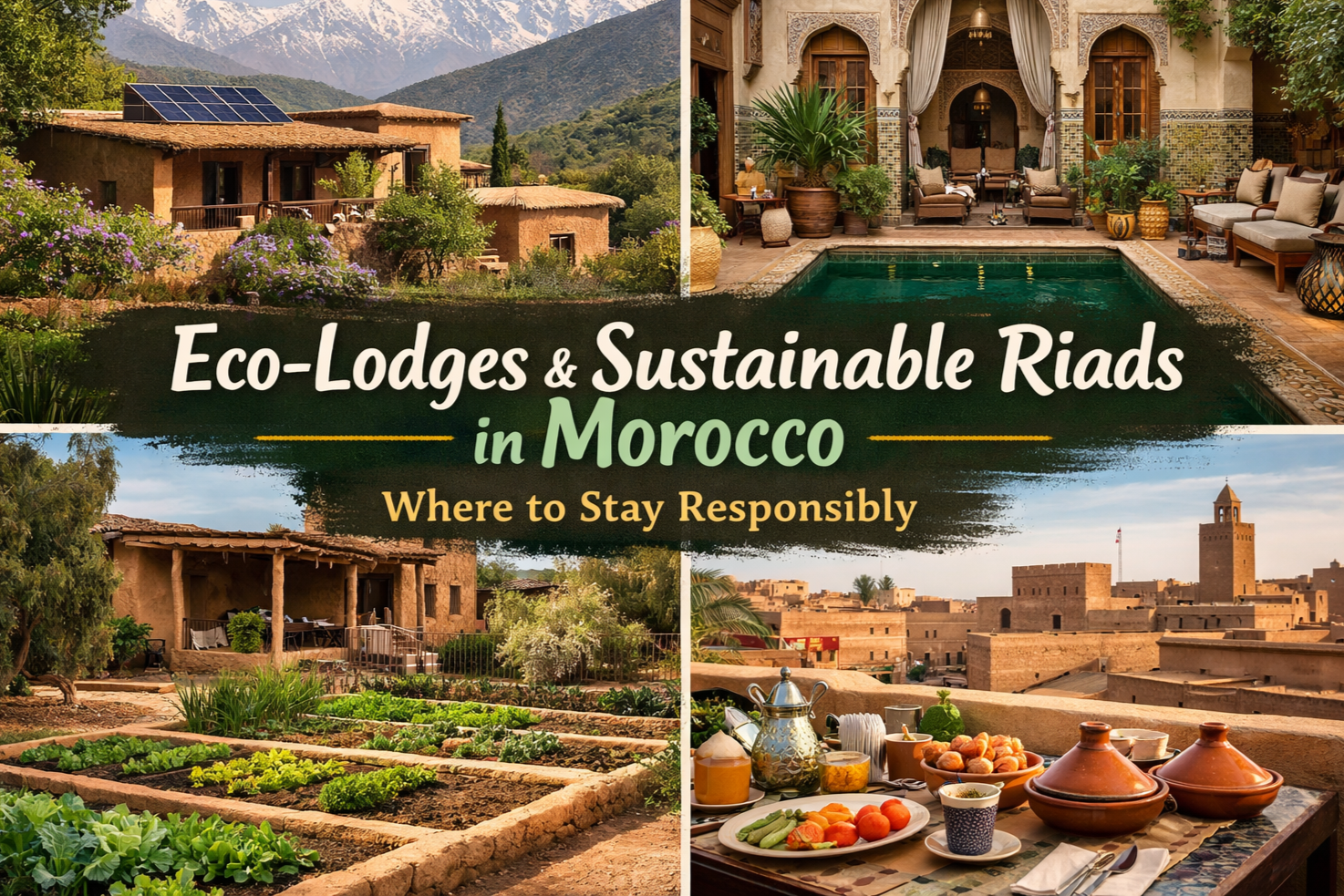
Choosing where to sleep determines your environmental footprint and community impact more than any other travel decision, with accommodation accounting for approximately 20 percent of tourism’s total carbon emissions while employment, purchasing, and community relationships create economic effects lasting long after checkout. Morocco’s sustainable accommodation sector has evolved dramatically over two decades from basic mountain guesthouses to sophisticated eco-lodges rivaling any global standards, yet understanding which properties deserve the “eco” label requires examining practices beyond solar panels and recycled toilet paper.
After working with dozens of sustainable accommodation projects across Morocco—from helping Atlas Mountain villages develop guesthouse standards to consulting with luxury eco-lodge developers on environmental systems—I’ve learned that genuine sustainability requires comprehensive approaches integrating environmental technology, cultural authenticity, community benefit, and transparent accountability. This guide profiles Morocco’s most impressive sustainable accommodations while providing frameworks for evaluating properties’ environmental and social credentials.
Understanding sustainable accommodation in Morocco
Genuine eco-lodges and sustainable riads demonstrate commitment through measurable practices across energy, water, waste, construction, food, employment, and community engagement rather than superficial green marketing. The certification landscape remains underdeveloped in Morocco compared to European standards, making independent evaluation essential for conscious travelers seeking truly sustainable options.
Energy systems: The most advanced properties operate entirely on renewable energy through solar photovoltaic and thermal systems, with battery storage providing nighttime power and backup generators used minimally during extended cloudy periods. Mid-level properties use hybrid systems combining solar with grid electricity or generators, while basic sustainable accommodations may simply minimize energy consumption through efficient lighting, natural ventilation, and limited air conditioning.
Water management: Comprehensive water stewardship includes conservation through low-flow fixtures and guest education, wastewater treatment using constructed wetlands or advanced septic systems, greywater recycling for gardens and landscapes, rainwater harvesting where applicable, and protection of source water quality through organic cleaning products and proper disposal practices.
Waste reduction: Progressive properties implement comprehensive waste management including composting organic materials for gardens, recycling programs for paper, glass, metal, and plastics despite limited municipal recycling infrastructure, purchasing policies minimizing packaging, refillable dispensers rather than single-use amenity bottles, and partnerships with local organizations for waste that can’t be processed on-site.
Construction and design: Sustainable building practices respect site ecology through minimal grading and vegetation removal, use local and traditional materials reducing transportation emissions while supporting local economies, incorporate passive solar design and natural ventilation reducing mechanical system needs, maintain human scale rather than large-footprint development, and reference local architectural traditions creating sense of place.
Food sourcing: Responsible properties prioritize local, seasonal, and where possible organic ingredients, maintain kitchen gardens growing herbs and vegetables, source from nearby farms and cooperatives rather than distant urban suppliers, offer traditional regional cuisine celebrating local food cultures, minimize food waste through careful planning and composting, and provide transparency about ingredient sources.
Employment and community: Genuine sustainable lodging employs local staff at fair wages with benefits and training, maintains local ownership or strong local partnerships, supports community development through schools, medical facilities, or infrastructure, sources services and supplies locally rather than from urban centers, respects local culture and customs, and maintains transparent relationships with surrounding communities.
Atlas Mountains eco-lodges and sustainable guesthouses
The High Atlas and Middle Atlas mountains contain Morocco’s greatest concentration of community-based sustainable accommodations, from basic village guesthouses to luxury eco-lodges, united by authentic cultural experiences and spectacular mountain settings.
Kasbah du Toubkal near Imlil village represents Morocco’s eco-lodge gold standard, occupying a former tribal chief’s kasbah with solar power, wastewater gardens, extensive community development programs, and partnerships with Imlil village creating shared benefits. The property employs village residents, sources food from valley farmers, operates a hammam using solar-heated water, and funds schools, medical facilities, and women’s cooperatives through the association Discover foundation. Rooms from $180 to $350 per night include meals showcasing local organic ingredients, with trekking, cultural programs, and the spectacular setting justifying premium pricing while ensuring significant community benefit.
The gîte d’étape network throughout valleys including Ait Bouguemez, M’Goun, Azzaden, and Mgoun provides family-run guesthouses offering basic comfortable accommodation, home-cooked meals, and authentic cultural immersion at $25 to $45 per person including half-board. These properties exemplify sustainable tourism through local ownership, traditional architecture using local materials, employment of family members preventing urban migration, purchase of supplies from valley farmers and artisans, and genuine cultural exchange as guests share family spaces and daily rhythms.
Dar Itrane in the Anti-Atlas near Tafraout combines boutique comfort with serious sustainability credentials including comprehensive solar power, organic gardens, partnership with local women’s argan cooperative, employment of village residents, and transparent environmental reporting. The British-Moroccan ownership brings professional hospitality standards while maintaining strong community relationships and authentic Berber cultural elements. Rooms from $100 to $180 include breakfast and access to gardens, terraces, and the remarkable surrounding mountain landscapes.
Kasbah Bab Ourika in the Ourika valley provides luxury eco-lodge experiences featuring solar power, organic gardens, locally-sourced cuisine, spa using organic Moroccan products, and support for valley educational and environmental programs. The property maintains smaller scale than commercial hotels with just 24 rooms and suites from $200 to $400, creating intimate atmospheres while employing valley residents and sourcing extensively from local suppliers. The location provides easy access to valley hiking, village visits, and Berber cultural experiences.
Chez Bassou in Imlil village demonstrates how simple guesthouses can achieve strong sustainability through community integration, traditional construction, local food sourcing, and authentic hospitality without expensive technology. The family-run property charges $30 to $50 per person for half-board, employing family members and neighbors, purchasing valley-grown food, and providing genuine cultural exchange as guests participate in family life.
Sustainable riads in imperial cities
Morocco’s imperial cities increasingly offer riads incorporating environmental practices and community engagement, though the urban context creates different sustainability challenges than rural eco-lodges including limited space for gardens or renewable energy, greater resource consumption serving urban luxury expectations, and more complex community dynamics than village settings.
Riad el-Fenn in Marrakech leads urban sustainability through solar water heating, extensive greywater recycling for gardens, local artisan employment and support, organic linens and amenities, partnerships with environmental and cultural organizations, and transparent sustainability reporting. The property maintains luxury standards including pools, spa, and fine dining while implementing environmental practices often absent from competing luxury riads. Rooms from $250 to $600 reflect luxury positioning while funding comprehensive environmental and community programs.
Peacock Pavilions outside Marrakech combines boutique luxury with permaculture gardens, solar power, organic cuisine from property gardens and local organic farms, natural swimming pool, employment of local staff with extensive training, and educational programs for guests and local communities about sustainable living. The property’s rural location enables more comprehensive environmental systems than medina riads while maintaining easy access to Marrakech cultural attractions. Rooms from $300 to $500 include meals from organic gardens.
Riad Kheirredine in Fes demonstrates urban sustainability in medina context through solar power, organic rooftop gardens, employment and training of local youth, support for medina artisan cooperatives, environmentally-sensitive restoration preserving historical elements, and integration into medina community life. The smaller scale with just six rooms from $90 to $150 allows personalized service and authentic medina experiences while maintaining strong environmental and community commitments.
Dar Ahlam in Skoura oasis near Ouarzazate provides luxury sustainable accommodation featuring organic gardens supplying majority of restaurant ingredients, solar power supplementing grid electricity, employment and training of local oasis residents, support for kasbah restoration and traditional irrigation systems, and integration of guests into oasis agricultural rhythms through garden tours and harvesting participation. The all-inclusive format from $500 to $800 per person includes meals, activities, and intimate experiences of traditional oasis life.
Desert eco-camps and sustainable Sahara accommodations
The Sahara Desert‘s fragile ecosystems and nomadic cultural heritage require particularly careful sustainable tourism approaches, with the best desert camps balancing minimal environmental impact with authentic cultural experiences and benefits to nomadic communities.
Sahara Sky near M’hamid operates entirely on solar power, maintains traditional Berber tent accommodation, employs local guides and camp staff, sources food from M’hamid oasis gardens, implements comprehensive waste management with pack-out policies, and partners with nomadic families for cultural programs and camel trekking. The camp’s remote location requires genuine low-impact practices as no grid power or municipal services exist, with rates from $120 to $180 per person including meals and activities reflecting the comprehensive services and sustainability investments.
Erg Chigaga Luxury Desert Camp demonstrates that luxury and sustainability can coexist through solar power systems, water conservation practices, employment of local Berber staff, support for nomadic communities through purchasing handicrafts and hiring guides, and extensive environmental management eliminating single-use plastics and managing waste responsibly. The comfortable tent accommodations from $150 to $250 per person provide upscale desert experiences while maintaining stronger environmental practices than many budget camps using generators and lacking proper waste systems.
Nomad Palace Camp near Merzouga prioritizes authentic Berber cultural experiences alongside environmental responsibility through simple traditional accommodations, solar lighting, composting toilets, partnerships with nomadic families, and immersive cultural programming including traditional music, bread-making, and henna ceremonies. The basic comfort at $60 to $90 per person half-board appeals to travelers prioritizing authenticity and sustainability over luxury, with the camp’s community relationships and minimal environmental impact justifying the experience.
Coastal surf eco-camps and beach sustainable lodging
Morocco’s Atlantic coast surf culture increasingly embraces sustainability, with eco-camps and surf lodges implementing environmental practices while building community relationships with fishing villages and supporting marine conservation.
Dar Itrane Sidi Ifni operates entirely on renewable energy from solar and wind systems, maintains organic gardens, implements comprehensive plastic-free policies, conducts beach cleanup programs, supports local fishing community development, and integrates environmental education into surf instruction and social programs. The property demonstrates serious commitment to sustainability through specific measurable practices and transparent reporting, with rooms and surf packages from $50 to $100 per person creating accessible sustainable surf tourism.
Amouage Surf & Yoga Taghazout combines surf culture with sustainability through solar power, organic kitchen gardens, yoga programs emphasizing wellness and environmental awareness, partnerships with local surf communities, beach environmental programs, and support for local artisan cooperatives. The property appeals to wellness-focused surf travelers seeking sustainable options beyond party hostels, with weekly packages from $400 to $600 including accommodation, meals, surf lessons, and yoga.
Choosing genuinely sustainable accommodations
Evaluating accommodation sustainability requires specific questions and research beyond accepting marketing claims at face value:
Energy questions: What percentage of power comes from renewable sources? What backup systems exist? How is heating/cooling provided? What energy conservation measures are implemented?
Water inquiries: What are water sources and conservation practices? How is wastewater treated? Is greywater recycled? Are cleaning products environmentally safe?
Waste management: What waste reduction, recycling, and composting programs exist? How are hazardous materials handled? What purchasing policies minimize waste?
Food sourcing: What percentage of ingredients are local, seasonal, organic? Do kitchen gardens exist? What are relationships with local farmers and suppliers?
Community relationships: What percentage of staff are local? What are wages and working conditions? What community development programs are supported? Is ownership local or are there strong local partnerships?
Transparency: Does the property provide specific information about practices? Are third-party certifications held? Is there reporting about environmental performance and improvements?
Reviews and recommendations: What do past guests say about environmental and community practices? Do environmental organizations or responsible tourism networks recommend the property?
Morocco’s sustainable accommodation sector provides genuine alternatives to conventional tourism, with properties demonstrating that environmental responsibility, cultural authenticity, and community benefit create better experiences than exploitative tourism regardless of how luxury the exploitation appears. Your accommodation choices directly impact communities and environments, making where you sleep as important as where you go.
Explore detailed itineraries combining sustainable accommodations with community-based experiences and nature-focused eco-adventures in our comprehensive guides to responsible Morocco travel.
Return to our complete guide to eco-tourism in Morocco for broader context on sustainable travel practices, responsible tour operators, and environmental considerations across all aspects of your journey.